
Most people brush twice a day, floss occasionally, and assume their teeth are well-maintained. Then they visit the dentist for a professional cleaning and discover what a toothbrush cannot reach — calcified deposits on the tooth surfaces and below the gum line that have been accumulating for months or years, quietly laying the groundwork for gum disease, cavities, and eventual tooth loss.
Professional dental cleanup in Kolkata is the single most cost-effective dental health intervention available. It prevents the conditions that lead to painful, expensive treatments — gum disease, root canal procedures, and tooth loss — and delivers immediate aesthetic benefits alongside the clinical ones. Yet surveys consistently show that fewer than 30 per cent of adults in India visit a dentist for routine care before symptoms develop. This guide explains what professional dental cleaning actually does, why brushing alone is insufficient, and what you can expect during a professional dental cleanup at IMAGE Clinic.
| When did you last have a professional dental cleanup? Book yours at IMAGE Clinic today. Book Your Dental Cleanup at IMAGE Clinic |
Why a Toothbrush Is Not Enough
A toothbrush — even used with perfect technique and the correct brush — removes plaque from tooth surfaces it can contact. What it cannot do is reach into the gum pockets around each tooth, access the tight contacts between teeth, or remove calculus (tartar) once it has formed.
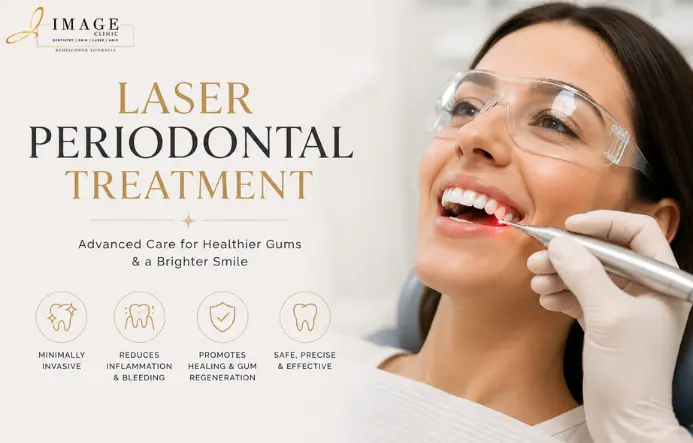
Calculus is mineralised dental plaque. When plaque — the soft, sticky bacterial film that forms on teeth within hours of eating — is not fully removed, it absorbs calcium and phosphate from saliva and hardens into calculus within 24–72 hours. Once mineralised, calculus cannot be removed by brushing or flossing. It adheres firmly to the tooth surface and, critically, to the root surface below the gum line — where it becomes the primary driver of periodontal (gum) disease.
The bacteria in calculus produce toxins that cause gum inflammation (gingivitis) and, if left untreated, progressive destruction of the bone and ligament supporting the teeth (periodontitis). Periodontitis is one of the leading causes of tooth loss in adults globally — and it is almost entirely preventable with regular professional cleaning.
What Happens During a Professional Dental Cleanup?
Step 1: Clinical Assessment
Before cleaning begins, the dental professional examines the teeth and gums, noting pocket depths (the space between tooth and gum — healthy pockets are 1–3mm; deeper pockets indicate gum disease), gum recession, signs of early decay, and existing restorations. At IMAGE Clinic, diagnostic X-rays are taken where indicated to assess bone levels and detect interproximal decay not visible clinically.
Step 2: Supragingival Scaling
Supragingival scaling removes calculus and hardened deposits from all tooth surfaces above the gum line. At IMAGE Clinic, this is performed using an ultrasonic scaler — a piezoelectric device that vibrates at high frequency to break down calculus while simultaneously irrigating the area with water. The ultrasonic scaler is significantly more efficient than hand instruments for bulk calculus removal and is also more comfortable for the patient.
Step 3: Subgingival Scaling and Root Planing
For patients with any degree of gum disease — characterised by pocket depths above 3mm — subgingival scaling addresses the calculus deposits on the root surface below the gum line. Fine hand curettes are used to access the gum pocket and remove calculus and infected tissue from the root surface. Root planing smooths the root surface to discourage bacterial reattachment. Local anaesthetic is used to ensure comfort during this phase.
Step 4: Polishing
After scaling, the tooth surfaces are polished using a rotating rubber cup with a mildly abrasive prophylaxis paste. Polishing removes surface stains from tea, coffee, tobacco, and food and smooths the enamel surface to slow the rate of future plaque accumulation. The immediate aesthetic improvement from polishing — brighter, smoother teeth — is one of the most noticeable results of a professional cleaning.
Step 5: Fluoride Treatment (Where Indicated)
A topical fluoride application may be recommended at the end of the cleaning, particularly for patients with a high caries risk or sensitivity. Fluoride remineralises the enamel surface, strengthening it against future acid attack from bacteria and dietary acids.
Step 6: Oral Hygiene Instruction
Every professional cleaning at IMAGE Clinic concludes with personalised oral hygiene guidance — specific techniques for brushing, flossing, or interdental cleaning based on the patient’s anatomy and the particular areas where plaque accumulation was noted. Research consistently shows that patients who receive personalised oral hygiene instruction maintain significantly better oral health between appointments.
| Give your teeth the professional care a toothbrush cannot provide. Book your dental cleanup at IMAGE Clinic. Book Your Dental Cleanup |
The Systemic Health Connection: Why Oral Health Matters Beyond the Mouth
The link between periodontal disease and systemic health is one of the most robustly evidenced areas of dental medicine. Chronic gum disease is associated with:
- Cardiovascular disease: The chronic inflammatory burden of untreated periodontitis is associated with elevated cardiovascular risk — with periodontal bacteria identified in atherosclerotic plaques.
- Diabetes: Periodontal disease impairs glycaemic control in diabetic patients — and conversely, poorly controlled diabetes accelerates periodontal disease. The relationship is bidirectional and clinically significant.
- Respiratory disease: Oral bacteria can be aspirated into the lungs, contributing to respiratory infections — particularly in elderly or medically compromised patients.
- Adverse pregnancy outcomes: Periodontal disease during pregnancy is associated with preterm birth and low birth weight — making professional dental care particularly important for pregnant patients.
Regular professional cleaning — which controls the bacterial load and inflammatory response in the gums — is therefore not just an oral health intervention. It is a contribution to overall systemic health.
How Often Should You Have a Professional Dental Cleanup?
| Patient Profile | Recommended Frequency | Rationale |
| Healthy adults with no gum disease | Every 6 months | Standard prevention interval |
| Patients with mild gingivitis | Every 3–4 months | More frequent removal of calculus supports gum recovery |
| Patients with active periodontitis | Every 3 months | Intensive management phase during active disease |
| Orthodontic patients (braces/aligners) | Every 3–4 months | Plaque accumulation increases significantly around brackets |
| Diabetic patients | Every 3–4 months | Bidirectional relationship between diabetes and gum disease |
| Smokers | Every 3–4 months | Increased calculus formation and impaired gum healing |
People Also Ask: Dental Cleanup in Kolkata
Is professional dental cleaning painful?
For patients with healthy gums, professional cleaning is comfortable and requires no anaesthetic. Patients with gum inflammation, sensitive teeth, or subgingival deposits may experience some sensitivity during scaling, which is managed with topical or local anaesthetic at IMAGE Clinic. Any post-procedure sensitivity typically resolves within 24–48 hours.
Will dental cleaning make my teeth whiter?
Professional cleaning removes surface stains from tea, coffee, tobacco, and food — immediately brightening the teeth. However, it does not change the intrinsic colour of the enamel. For patients seeking a significant shade change, professional teeth whitening can be combined with a cleaning session for a comprehensive aesthetic result.
Do I need dental cleaning if I brush and floss regularly?
Yes. Even meticulous daily brushing and flossing cannot remove all plaque from every tooth surface — particularly in the interdental spaces and sub-gingival areas. Calculus forms in areas that brushing misses, regardless of the standard of home care. Professional cleaning addresses what home oral hygiene leaves behind.
Can dental cleaning damage tooth enamel?
No. Professional scaling and ultrasonic cleaning do not damage healthy enamel. The instruments and techniques used are specifically designed to remove deposits from the tooth surface without abrading the underlying enamel structure. This is a common concern but is not supported by evidence from properly conducted professional cleanings.
How do I book a dental cleanup in Kolkata at IMAGE Clinic?
Call IMAGE Clinic at 09830 836 666 or book online via our contact page. Professional dental cleanup appointments are available at all IMAGE Clinic Kolkata locations.
| Professional Dental Cleanup in Kolkata — IMAGE ClinicHealthier gums. Brighter teeth. Comprehensive oral care. Book Your Appointment Now | Call: 09830 836 666 Or visit your nearest IMAGE Clinic — find your nearest branch here. |