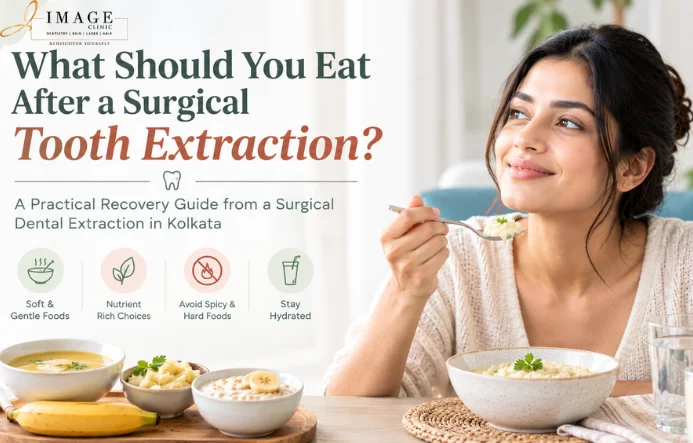
Most patients who have undergone surgical dental extraction in Kolkata at IMAGE Clinic receive clear instructions about what to avoid eating — hard foods, crunchy foods, spicy foods, very hot foods. What they receive less clearly, and what matters just as much, is what they should actively eat to support healing. Post-extraction nutrition is not simply a matter of comfort during the soreness period. The speed and quality of socket healing — the rate at which the blood clot stabilises, the tissue granulates, and the bone remodels — is directly influenced by the nutritional substrate available to the healing process. Eating the wrong foods delays healing; eating the right foods accelerates it.
This guide from IMAGE Clinic’s dental team provides the complete, practical post-extraction diet plan — what to eat at each stage of healing, what to avoid and why, and which nutritional steps make the most difference to recovery after surgical dental extraction in Kolkata.
| For expert post-extraction care guidance at IMAGE Clinic, book your follow-up appointment. Book Your Post-Extraction Follow-Up at IMAGE Clinic |
Why Surgical Extraction Requires More Dietary Care Than Simple Extraction
A surgical dental extraction in Kolkata — typically performed for impacted wisdom teeth, fractured roots, or teeth with complex root anatomy — involves incision of the gum tissue, removal of bone where necessary, and suturing of the wound after tooth removal. This is categorically different from a simple extraction, where the tooth is removed without incision. The surgical wound heals through the same four-phase process as any surgical incision — haemostasis, inflammation, proliferation, and remodelling — and each phase has specific nutritional requirements that determine the rate and quality of healing.
The additional consideration specific to oral surgery is the risk of dry socket — the painful condition where the blood clot in the extraction socket is dislodged before the tissue has granulated sufficiently to protect the exposed bone beneath. Dietary choices in the first seventy-two hours are the primary modifiable risk factor for dry socket prevention.
The Critical First 24 Hours: Clot Protection
The blood clot that forms in the socket immediately after extraction is the foundation of all subsequent healing. Everything in the first twenty-four hours is designed around protecting this clot:
- Temperature: Cold and room-temperature foods only. Hot foods and liquids dilate blood vessels, increase blood flow to the socket, and risk dissolving the clot before it has stabilised. No hot tea, hot soup, or hot rice for the first twenty-four hours.
- No suction: The negative pressure created by sucking — through a straw, drinking from a bottle, or sucking on a sweet — is one of the most common causes of dry socket. Even gentle suction can dislodge the forming clot. Drink from a cup with small sips only.
- No chewing on the extraction side: Any mechanical pressure on the socket risks disturbing the clot. Chew exclusively on the opposite side.
- No alcohol: Alcohol is both vasodilatory (increases bleeding risk) and interferes with clot formation and wound healing chemistry. Avoid entirely for at least forty-eight hours.
What to Eat in the First 24 Hours
Cold or room-temperature soft foods that require no chewing and create no suction:
- Chilled yoghurt — provides protein and calcium for healing; probiotic strains support the oral microbiome disrupted by the procedure
- Cold dal (thin, blended) — warm enough not to be unpleasant, cool enough to be safe
- Banana mashed with milk — soft, nutritious, no chewing required
- Chilled coconut water — hydration with electrolytes; gentle on the socket
- Cold kheer or rice pudding at room temperature — soft, calorically adequate
Days 2–3: Building the Diet While Protecting the Socket
From the second day after surgical dental extraction in Kolkata, the blood clot has begun to stabilise and early granulation tissue is forming. The dietary restrictions can be partially relaxed — but soft foods only, and still nothing that requires significant chewing or that risks disturbing the socket:
- Soft cooked rice with dal — the staple Indian meal made socket-safe by ensuring the rice is thoroughly cooked to a soft consistency and eating away from the extraction side
- Soft scrambled eggs — one of the best post-extraction foods because they are high in protein (essential for tissue healing), require minimal chewing, and are well-tolerated at a warm (not hot) temperature
- Mashed sweet potato or aloo — soft, easy to swallow, provides carbohydrate energy and vitamin A for epithelial repair
- Soft paneer in sauce — protein-rich; cut into small pieces; avoid hard or fried varieties
- Soup (warm, not hot) — thin soups without chunks or fibres that could get into the socket; drink from a cup rather than a spoon for the first three days
| Experiencing post-extraction discomfort or concerned about your healing? Contact IMAGE Clinic’s dental team in Kolkata for guidance. Contact IMAGE Clinic’s Dental Team |
Days 4–7: The Soft Diet Phase
By day four, the granulation tissue filling the socket is established, and the risk of dry socket is significantly reduced. A soft diet is maintained, but the range of foods expands meaningfully:
| Food Category | Good Choices | Avoid |
| Protein | Soft fish, soft chicken in gravy, eggs, soft dal, blended legumes | Hard meat, fried fish, tough chicken, whole legumes |
| Carbohydrate | Soft rice, idli, soft roti, upma, khichdi | Hard bread, toast, biscuits, crispy items |
| Dairy | Yoghurt, paneer (soft), milk, chilled lassi | Hard cheese, cold ice cream (if very cold causes sensitivity) |
| Vegetables | Well-cooked soft vegetables, mashed potato, soft sabzi | Raw vegetables, salad, anything crunchy or fibrous |
| Fruit | Banana, soft papaya, mango pulp, avocado | Apple, guava, pear — anything that requires biting |
The Nutritional Priorities That Speed Healing
Beyond avoiding damaging foods, actively prioritising these nutrients produces faster healing after surgical dental extraction in Kolkata:
- Protein (minimum 1.0–1.5g/kg body weight daily): Collagen synthesis — which forms the structural matrix of the healing gum tissue — requires adequate amino acid substrate. Most patients eat significantly less protein during the post-extraction soft-food period because their usual protein sources (hard meat, whole legumes, crunchy foods) are off the menu. Compensate with eggs, soft paneer, dairy, blended dal, and soft fish.
- Vitamin C (at least 200mg daily): Required for hydroxyproline synthesis — the step that converts proline into the structurally stable form used in collagen. Amla juice, fresh orange juice (without using a straw), and guava are excellent sources that are appropriate during the post-extraction period.
- Zinc (from soft protein sources): Essential for cellular repair and immune function in the healing socket. Eggs and soft fish are the most practical soft-diet zinc sources.
- Hydration: Adequate water intake maintains salivary flow, which is the oral cavity’s natural antimicrobial protection. Dehydration reduces salivary flow, increasing the bacterial load in the extraction socket. Aim for two to three litres of water daily through the recovery period.
For patients who want a comprehensive post-procedure nutrition programme, IMAGE Clinic’s functional nutrition team provides personalised guidance on optimising recovery nutrition for both dental and aesthetic procedures.
What to Avoid After Surgical Dental Extraction in Kolkata
These foods and habits consistently worsen healing or increase complication risk after surgical dental extraction in Kolkata:
- Spicy food: Capsaicin and other spice compounds irritate the healing gum tissue, increase local inflammation, and can disrupt the clot in the first seventy-two hours. Avoid for at least five to seven days.
- Tobacco: Smoking is the single highest-risk behaviour for dry socket — nicotine causes vasoconstriction that impairs tissue oxygenation, and the suction of smoking physically disturbs the clot. Avoid for a minimum of seventy-two hours; ideally for the full healing period.
- Seeded or fibrous foods: Seeds (sesame, chia, poppy), fibrous vegetables, and stringy meat strands can become lodged in the socket and introduce bacteria into the healing tissue. Avoid for the first ten days.
- Carbonated drinks: The carbonation creates micro-bubbles that can disturb the socket contents; the acidity can also irritate healing gum tissue. Avoid for the first week.
People Also Ask: Surgical Dental Extraction in Kolkata
What can I eat the day after tooth extraction?
Short answer: The day after surgical dental extraction in Kolkata, eat cold or room-temperature soft foods only — chilled yoghurt, mashed banana with milk, thin blended dal, soft kheer, coconut water. Nothing hot, nothing requiring chewing, nothing consumed through a straw. The priority is protecting the blood clot from mechanical and thermal disruption while maintaining adequate caloric and protein intake for healing.
How long does it take to heal after surgical tooth extraction?
Short answer: The soft tissue (gum) closes over the socket within one to two weeks for most patients after surgical dental extraction in Kolkata. The socket fills with granulation tissue by weeks two to three; bone remodelling in the socket continues for three to six months. Pain and swelling resolve within three to five days for most patients. Returning to a normal diet is typically comfortable by day seven to ten.
What is dry socket and how do I prevent it?
Short answer: Dry socket occurs when the blood clot in the extraction socket is dislodged before the tissue has adequately granulated — exposing the bone beneath and causing significant pain. The primary prevention steps after surgical dental extraction in Kolkata: no straws, no smoking, no hot liquids, no suction, and no spitting forcefully for the first seventy-two hours. Following the dental team’s post-extraction instructions precisely is the most reliable prevention.
Can I eat rice after tooth extraction?
Short answer: Yes — from day two onward, thoroughly soft-cooked rice is appropriate after tooth extraction when chewed on the opposite side of the mouth. Avoid rice with hard accompaniments (hard fried fish, crunchy vegetables) and ensure dal or gravy makes the meal easy to swallow without forceful chewing. Rice with soft dal and cooked vegetables is one of the most practical post-extraction meals for Kolkata patients from day two.
When can I eat normally after surgical tooth extraction?
Short answer: Most patients return to a mostly normal diet by day seven to ten after surgical dental extraction in Kolkata. Particularly hard, crunchy, or fibrous foods — raw vegetables, hard biscuits, whole nuts — should be avoided for two weeks. Very spicy food is comfortable again for most patients by day seven to ten when the gum tissue has closed over the socket. Resume any foods that cause discomfort or socket-level sensitivity more slowly.
| Surgical Dental Extraction in Kolkata — IMAGE Clinic Expert dental surgery. Precise aftercare. Smooth, fast recovery. Book Your Appointment Now | Call: 09830 836 666 Or visit your nearest IMAGE Clinic — find your nearest branch here. |