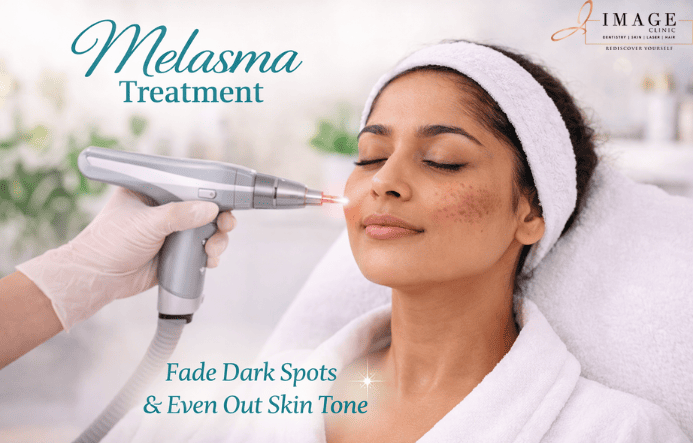
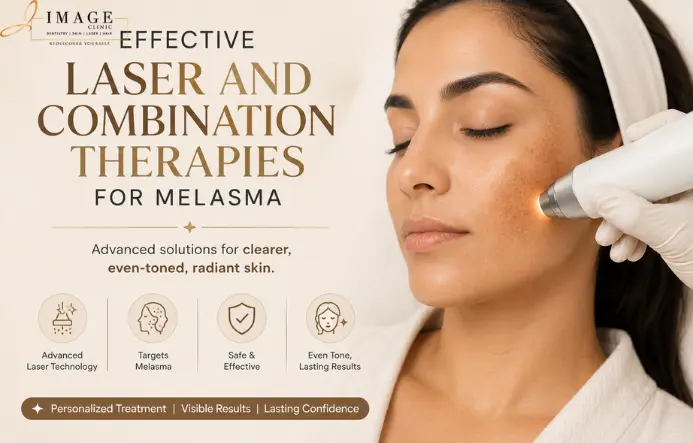
Melasma has a reputation for being the most difficult pigmentation condition to treat — and that reputation is not entirely undeserved. Unlike solar lentigines (sun spots) or simple post-acne marks, which respond predictably to laser treatment, melasma is a chronic, relapsing condition driven by multiple overlapping mechanisms that a single treatment cannot fully address. Patients who have tried one treatment, seen partial improvement, and then watched the pigmentation return are not experiencing treatment failure — they are experiencing the fundamental nature of melasma.
The key insight that changes outcomes is this: effective melasma treatment in Kolkata requires a coordinated, multi-modal approach — combining treatments that address different aspects of the condition simultaneously, rather than applying a single modality and expecting complete resolution. This guide explains why that is, and how IMAGE Clinic’s combination protocol delivers the most comprehensive and sustained melasma improvement available.
| Melasma that hasn’t responded to previous treatments? Our dermatologists specialise in combination melasma protocols. Book Your Melasma Consultation at IMAGE Clinic |
Why Melasma Is Different from Other Pigmentations
Melasma is driven by at least three distinct biological mechanisms — and this is why a single treatment is rarely sufficient:
- Epidermal melanin excess: Melanocytes in the epidermis produce excess melanin in response to UV exposure and hormonal signalling. This is the most visible component — the brown discolouration that appears on the skin surface.
- Dermal melanophages: Phagocytic cells (melanophages) in the dermis engulf and store melanin released from damaged epidermal melanocytes. Dermal melasma is characterised by a blue-grey tint to the patches and responds more slowly to treatment than purely epidermal melasma.
- Vascular component: Blood vessel proliferation and increased vascularity in the melasma-affected dermis contribute to redness and inflammatory signalling that perpetuates melanocyte stimulation. This vascular component explains why many melasma patients see their patches worsen with heat exposure and inflammatory stimuli.
Treatment must address all three components simultaneously — suppressing melanin production, clearing accumulated pigment (epidermal and dermal), reducing the vascular inflammatory stimulus, and protecting the treated skin from UV-triggered recurrence.
The Evidence-Based Combination Protocol for Melasma
Foundation: Cosmelan Depigmentation System
The Cosmelan peel is the most clinically validated in-clinic depigmentation system for melasma. Its formulation inhibits tyrosinase at multiple enzymatic steps in the melanin synthesis pathway — a mechanism distinct from hydroquinone alone, which inhibits only one step. This multi-point inhibition produces a more comprehensive suppression of melanin production that is particularly effective for treatment-resistant melasma.
The Cosmelan system consists of an intensive in-clinic application followed by a prescribed home maintenance cream used daily for several months. The in-clinic phase produces significant melanin suppression and surface pigment disruption. The home phase maintains this suppression while the skin’s renewal cycle progressively clears the lightened melanin. Most patients see meaningful visible improvement within four to six weeks of starting the Cosmelan protocol.
Layer 2: Laser Toning (Q-Switched Nd: YAG)
Low-fluence Q-switched Nd: YAG laser toning is the safest laser modality for melasma in Indian skin. At low fluences — below the threshold that causes significant epidermal disruption — the laser fragments superficial melanin deposits without causing the post-laser hyperpigmentation that aggressive laser protocols can trigger. Sessions are typically performed monthly, alternating with or supplementing the Cosmelan maintenance phase.
The key principle for laser toning in melasma is conservative — low-fluence, multiple sessions, no aggressive single treatment. Aggressive high-fluence laser application to melasma in Indian skin triggers a PIH response that worsens the condition. IMAGE Clinic’s dermatologists calibrate laser parameters specifically for melasma management in Fitzpatrick types III–V.
Layer 3: Targeted Vascular Treatment
For patients with a prominent vascular component to their melasma — typically identified by the presence of erythema (redness) within the patches and significant heat sensitivity — vascular laser treatment using the Nd: YAG laser at vascular-targeting parameters reduces the blood vessel proliferation driving ongoing melanocyte stimulation. Addressing the vascular component reduces the inflammatory signalling that perpetuates melanin production, improving the durability of the pigmentation response.
Layer 4: Medical-Grade Topical Maintenance
Between in-clinic sessions, prescribed topical agents maintain the treatment gains and continue to suppress melanin production. At IMAGE Clinic, topical protocols for melasma typically combine azelaic acid (anti-inflammatory and tyrosinase-inhibiting), kojic acid (tyrosinase inhibitor), niacinamide (melanin transfer inhibitor), and — where clinically appropriate — hydroquinone (the most potent depigmenting agent available, used in supervised cycles). These agents are prescribed at concentrations available only by a dermatologist’s prescription and are significantly more effective than over-the-counter brightening products.
Non-Negotiable: Broad-Spectrum SPF 50+
No melasma treatment — regardless of how well-designed — produces lasting results without rigorous, consistent sun protection. UV exposure is the primary exogenous trigger for melanocyte stimulation in melasma-prone skin. A single afternoon of inadequate sun protection during an active treatment course can undo weeks of pigmentation clearance. At IMAGE Clinic, daily broad-spectrum SPF 50+ use is prescribed as part of every melasma treatment protocol — it is not optional, and its importance is emphasised at every appointment.
| Melasma requires a specialist approach. Our dermatologists design personalised combination protocols for lasting results. Book Your Melasma Treatment Consultation |
What Realistic Improvement Looks Like
| Timeline | What to Expect |
| Weeks 1–4 | Subtle brightening from Cosmelan; initial surface melanin disruption beginning |
| Weeks 5–8 | Visible lightening of patches — typically 20–40% improvement; skin tone more even |
| Months 2–4 | Progressive clearing as Cosmelan + laser toning combination gains momentum; 50–70% improvement in responsive cases |
| Months 4–6 | Continued gradual improvement; dermal component addressing; patches significantly less prominent |
| 6+ months | Maximum improvement typically reached; maintenance phase begins; results sustained with ongoing SPF and topical protocol |
It is important to note that complete elimination of melasma is not a realistic expectation in most cases. The goal is significant, sustained control — patches that are dramatically less visible, that do not worsen with normal UV exposure if sun protection is maintained, and that require only periodic maintenance to keep under control rather than constant active treatment.
People Also Ask: Melasma Treatment in Kolkata
Can melasma be permanently cured?
Melasma is a chronic condition — the melanocytes responsible for the pigmentation remain reactive to UV and hormonal triggers even after successful treatment. Complete, permanent elimination is not achievable for most patients. However, significant and sustained control is achievable with the right combination of protocol and rigorous sun protection. Many patients achieve near-complete clearing that they maintain for years with appropriate maintenance.
How long does melasma treatment take?
Meaningful visible improvement is typically evident by weeks four to eight with the Cosmelan combination protocol. Maximum improvement is usually reached by four to six months. The maintenance phase continues indefinitely — but at a lower intensity than the active treatment phase.
Is laser safe for melasma in Indian skin?
Low-fluence Q-switched Nd: YAG laser toning is safe for melasma in Indian skin when performed by a dermatologist experienced in treating Fitzpatrick types III–V. The critical principle is conservative parameters — aggressive laser treatment of melasma in Indian skin risks triggering post-inflammatory hyperpigmentation that worsens the condition. IMAGE Clinic’s laser toning protocol for melasma is specifically calibrated for darker skin tones.
Why does my melasma keep coming back?
Melasma recurs because the underlying melanocyte reactivity — the genetic predisposition that makes the melanocytes in the affected areas hyper-responsive to UV and hormonal signals — remains even after successful treatment. Without ongoing maintenance (SPF, topicals, periodic laser sessions), the triggers that produced the original melasma will progressively restimulate melanin production. This is why treatment of melasma is a long-term management commitment rather than a one-time intervention.
What makes the IMAGE Clinic melasma protocol different?
IMAGE Clinic’s melasma protocol addresses all three biological components of the condition simultaneously — epidermal pigment, dermal melanophages, and vascular inflammatory stimulus — using a coordinated combination of Cosmelan peel, laser toning, vascular laser where indicated, and medical-grade topicals. This multi-modal approach consistently produces better and more durable outcomes than single-treatment protocols.
| Melasma Treatment in Kolkata — IMAGE ClinicMulti-modal. Evidence-based. Sustained results. Book Your Appointment Now | Call: 09830 836 666 Or visit your nearest IMAGE Clinic — find your nearest branch here. |