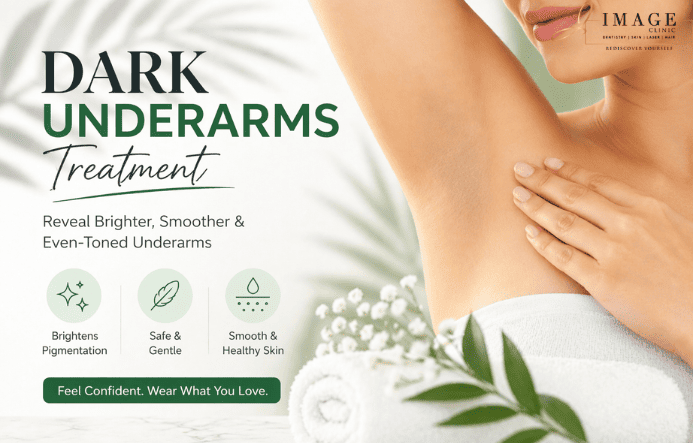
Dark underarms are among the most common cosmetic concerns for both men and women in India — yet they remain one of the least discussed. If you have been avoiding sleeveless outfits or feeling self-conscious at the gym or on the beach, you are not alone. Effective dark underarms treatment in Kolkata is now available at IMAGE Clinic, where board-certified dermatologists use US FDA-approved technology to address underarm pigmentation safely and effectively for Indian skin tones.
This comprehensive guide explains why underarm darkening occurs, which treatments work, and what you can realistically expect — so you can make an informed decision before booking a consultation.
| Ready to address your dark underarms with expert dermatological care? Book Your Consultation at IMAGE Clinic |
Why Do Underarms Become Dark? Understanding the Root Causes
Before pursuing any dark underarm treatment in Kolkata, it is important to understand what is driving the pigmentation. Darkening of the underarm skin — medically referred to as axillary hyperpigmentation — has several distinct causes, and identifying the right one is key to choosing the most effective treatment.
1. Friction and Mechanical Irritation
The underarm is a fold area where skin-to-skin contact and clothing friction occur constantly. This repeated mechanical irritation triggers a process called post-inflammatory hyperpigmentation (PIH), where melanocytes — the pigment-producing cells — respond to trauma by releasing excess melanin. Tight clothing, rough fabrics, and vigorous towel-drying all contribute.
2. Shaving and Hair Removal Methods
Shaving is one of the most common culprits. The razor blade does not just remove hair — it creates microscopic cuts and abrasions on the skin surface, triggering repeated inflammation and melanin deposition over time. The dark shadow effect after shaving is also partially caused by sub-surface hair stubs visible through the skin. Switching to laser hair removal eliminates the root cause entirely and is often recommended as part of a comprehensive treatment plan.
3. Deodorants and Antiperspirants
Many commercial deodorants contain alcohol, fragrances, and aluminium compounds that can irritate the delicate underarm skin. This chronic irritation disrupts the skin barrier and stimulates melanin production. Individuals with sensitive skin are particularly susceptible.
4. Acanthosis Nigricans
This is a dermatological condition characterised by dark, velvety discolouration in body folds, including the underarms, neck, and groin. It is closely associated with insulin resistance, obesity, hormonal conditions such as PCOS, and certain medications. Treatment of the underlying systemic condition is essential alongside topical therapies.
5. Hormonal Factors
Hormonal fluctuations — particularly elevated oestrogen levels during pregnancy, the use of oral contraceptives, or thyroid imbalances — can stimulate melanocyte activity and lead to darkening of body fold areas. This form of pigmentation often improves with hormonal stabilisation.
6. Dead Skin Cell Accumulation
Insufficient exfoliation allows dead skin cells to build up in the underarm area, creating a thickened, dull, and darker appearance. Regular exfoliation — both at home and through professional chemical peel treatments — can help address this component.
Dark Underarms Treatment in Kolkata: What IMAGE Clinic Offers
At IMAGE Clinic, your dark underarms treatment in Kolkata begins with a thorough consultation to determine the underlying cause of darkening. Our dermatologists then design a customised treatment plan that may combine one or more of the following clinically validated approaches.
Laser Toning (Q-Switched Nd: YAG Laser)
Q-switched Nd: YAG laser toning is one of the most effective treatments for underarm pigmentation. The laser emits precise pulses of light at wavelengths of 1064nm (for deep melanin) and 532nm (for superficial pigmentation), which are selectively absorbed by melanin in the skin without damaging surrounding tissue. The fragmented melanin particles are then cleared by the body’s lymphatic system.
The treatment is safe for Indian skin tones (Fitzpatrick types III–V) when performed by an experienced dermatologist using calibrated energy settings. A series of six to eight sessions, spaced two to three weeks apart, typically delivers visible lightening of underarm skin.
Laser Hair Removal — Eliminating the Root Cause
For patients whose underarm darkening is primarily driven by frequent shaving or waxing, laser hair removal is a transformative solution. By permanently reducing hair growth at the follicular level, laser hair removal eliminates the cycle of repeated skin trauma that sustains hyperpigmentation. Most patients notice a gradual improvement in skin tone alongside a reduction in hair density across six to eight sessions.
Chemical Peels — Targeted Exfoliation
Medical-grade chemical peels accelerate the skin’s natural exfoliation process, breaking down the bonds that hold dead, pigmented cells to the surface. For underarm darkening, glycolic acid peels (20–40 per cent), lactic acid peels, and kojic acid formulations are commonly used. These peels improve texture, reduce PIH, and enhance the penetration of brightening topical agents.
Superficial peels require little to no downtime and are typically repeated every three to four weeks. Medium-depth peels may be recommended for more significant pigmentation with an appropriate recovery period.
Carbon Peel (Hollywood Peel)
The carbon peel treatment involves applying a layer of liquid carbon to the skin surface, which penetrates the pores. When the Q-switched laser is fired over the carbon layer, it vaporises the carbon along with the attached dead skin cells, excess sebum, and surface pigment. This treatment improves skin tone, tightens pores, and enhances radiance — making it a popular choice for underarm brightening with zero downtime.
Topical Brightening Therapy
Clinically formulated topical agents prescribed by our dermatologists accelerate the results of in-clinic treatments. These may include hydroquinone, azelaic acid, kojic acid, alpha-arbutin, and retinoids — ingredients that inhibit tyrosinase (the enzyme responsible for melanin production) or accelerate cellular turnover. These are prescribed at appropriate concentrations for Indian skin to minimise the risk of irritation or rebound pigmentation.
Underarm Skin Booster Injections
For patients seeking targeted improvement in skin quality, skin booster injections containing hyaluronic acid, vitamins, and antioxidants can be administered to the underarm area. These treatments hydrate the skin from within, improve texture, and support the brightening process by creating a healthier skin microenvironment.
| Speak with our dermatologists to find the right treatment combination for your underarm concerns. Book Your Appointment Now |
Comparing Dark Underarms Treatments: Which Is Right for You?
| Treatment | Best For | Sessions Required | Downtime | Results Timeline |
| Laser Toning | Established PIH, stubborn pigmentation | 6–8 | Minimal | 3–6 months |
| Laser Hair Removal | Shaving-induced darkening | 6–8 | None | Gradual, concurrent |
| Chemical Peels | Mild–moderate pigmentation, texture | 4–8 | 1–3 days | 4–8 weeks |
| Carbon Peel | Surface darkening, pores, dullness | 4–6 | None | 2–4 weeks |
| Topical Therapy | Maintenance, mild cases, adjunct | Daily use | None | 6–12 weeks |
| Skin Boosters | Overall quality improvement | 2–3 | None | 4–8 weeks |
Underarm Whitening Kolkata: What to Expect at Your IMAGE Clinic Consultation
Your journey towards lighter, smoother underarms at IMAGE Clinic follows a structured process designed to ensure safety, efficacy, and personalised care:
- Comprehensive Consultation: Your dermatologist will assess the extent and type of pigmentation, review your skin history, and identify any underlying systemic factors (such as PCOS or insulin resistance) that may need to be addressed in parallel.
- Skin Type Assessment: Indian skin falls predominantly in the Fitzpatrick III–V range, which requires careful laser parameter selection and chemical peel concentrations to minimise the risk of post-treatment PIH. Our experienced dermatology team is trained in treating darker skin tones safely.
- Customised Treatment Plan: Rather than a one-size-fits-all approach, your dermatologist will design a multi-modal protocol — often combining laser therapy, peels, and prescription topicals — tailored to your pigmentation type, lifestyle, and timeline.
- In-Clinic Sessions: Each treatment session is performed by a qualified professional with calibrated, US FDA-approved equipment. Sessions for laser treatments typically last 20–30 minutes with no anaesthesia required.
- Home Care Protocol: Your dermatologist will prescribe a daily routine including sunscreen (SPF 30+ for body areas if exposed), brightening topicals, and gentle exfoliation guidelines to support in-clinic results.
- Maintenance: Once target results are achieved, periodic maintenance sessions and topical use help sustain outcomes long-term, particularly if the underlying cause (such as friction or shaving) cannot be eliminated entirely.
Lifestyle Modifications That Enhance Treatment Outcomes
Clinical treatments deliver the best results when supported by appropriate lifestyle adjustments:
- Switch to laser hair removal: Laser hair removal is the single most impactful change for those whose darkening is shaving-related. It eliminates the mechanical trauma cycle entirely.
- Choose gentle deodorants: Opt for aluminium-free, fragrance-free formulations. Patch-testing new products before regular use is advisable.
- Wear breathable fabrics: Loose, natural-fibre clothing reduces friction and allows the underarm skin to recover between treatment sessions.
- Stay hydrated and maintain a balanced diet: For patients with acanthosis nigricans, dietary changes that improve insulin sensitivity can significantly support treatment outcomes.
- Avoid vigorous scrubbing: Harsh mechanical exfoliation between sessions can aggravate inflammation and worsen PIH. Use a mild, pH-balanced cleanser instead.
- Apply SPF if underarms are exposed: If you are wearing sleeveless clothing, applying a body sunscreen to the underarm area prevents UV-triggered melanin stimulation during treatment.
| Our dermatologists will create a personalised plan that fits your skin, lifestyle, and goals. Schedule Your Consultation Today |
Why Choose IMAGE Clinic for Dark Underarms Treatment in Kolkata?
IMAGE Clinic is Kolkata’s leading destination for advanced aesthetic and dermatological treatments. When it comes to dark underarms treatment in Kolkata, several factors set IMAGE Clinic apart:
- Board-Certified Dermatologists: Our specialist team includes dermatologists with advanced training in laser medicine and pigmentation disorders, ensuring that every treatment protocol is clinically sound.
- US FDA-Approved Technology: All laser devices and energy-based equipment used at IMAGE Clinic carry US FDA approval, guaranteeing safety and efficacy standards beyond what many clinics in Kolkata offer.
- Indian Skin Expertise: Treating darker skin tones requires a nuanced understanding of Fitzpatrick types, PIH risk management, and appropriate energy calibration. Our team has extensive experience specifically with Indian skin.
- Personalised Protocols: No two patients receive the same treatment plan. Your protocol is designed around your specific pigmentation type, cause, and desired outcome.
- Transparent Results: Our before and after gallery reflects the real results achieved for actual patients — setting honest expectations from day one.
- Comprehensive Care: Beyond underarm treatments, IMAGE Clinic offers a full spectrum of skin and aesthetic treatments — from bikini hair reduction to skin lightening — under one roof.
Frequently Asked Questions: Dark Underarms Treatment in Kolkata
1. How many sessions does dark underarms treatment require?
The number of sessions depends on the treatment type and severity of pigmentation. Laser toning typically requires six to eight sessions spaced two to three weeks apart. Chemical peels may need four to eight sessions at three-to-four-week intervals. Your dermatologist will provide a personalised estimate during the initial consultation.
2. Is dark underarms treatment safe for Indian skin?
Yes — when performed by a trained dermatologist using appropriate parameters for Fitzpatrick skin types III–V. The key risk for Indian skin is post-inflammatory hyperpigmentation (PIH), which our team actively mitigates through careful treatment planning, sun protection protocols, and pre-treatment priming.
3. Can dark underarms be permanently cured?
Permanent results depend on addressing the underlying cause. If darkening is caused by shaving, switching to laser hair removal removes the root trigger. If the cause is hormonal or systemic, ongoing maintenance may be needed. Topical maintenance between sessions helps sustain results.
4. What is the downtime after laser underarm treatment?
Laser toning and carbon peel treatments have minimal to no downtime. You may experience mild redness for a few hours post-session, which resolves without intervention. Chemical peels at higher concentrations may result in one to three days of mild peeling.
5. How soon will I see results from dark underarms treatment?
Initial lightening may be visible after two to three sessions of laser toning, with progressive improvement over the full treatment course. Chemical peels show visible texture improvement after the first session. Full results are typically assessed three months after completing the recommended sessions.
6. Can I undergo dark underarms treatment if I have sensitive skin?
Yes. Our dermatologists conduct a thorough skin assessment before recommending any treatment. For sensitive skin, we may opt for milder peel concentrations, lower laser fluences, or skin-booster-based protocols that are gentler while still effective.
7. Should I stop using deodorant before treatment sessions?
We recommend avoiding deodorant application on the day of your treatment session. Your dermatologist will provide specific pre-treatment instructions during your consultation.
8. Can dark underarm treatment be combined with laser hair removal?
Yes, and in fact, this combination is frequently recommended at IMAGE Clinic. Laser hair removal and laser toning can be scheduled in the same treatment plan, often on the same device, making the approach efficient and cost-effective.
9. Is the bikini area darkening treated similarly to underarm darkening?
Yes — the principles and treatments are similar, as both are body fold areas prone to friction, PIH, and hormonal pigmentation. IMAGE Clinic offers dedicated bikini hair reduction and pigmentation treatment for the bikini line as well.
10. How do I book a consultation for dark underarm treatment in Kolkata?
You can book a consultation online or by calling IMAGE Clinic directly at 09830 836 666. Visit your nearest IMAGE Clinic location in Kolkata to meet with one of our dermatologists and begin your personalised treatment journey.
| Start Your Dark Underarms Treatment Journey Today Consult our expert dermatologists at IMAGE Clinic, Kolkata. Book Your Appointment Now | Call: 09830 836 666 Or visit your nearest IMAGE Clinic — find your nearest branch here. |