
October is when most people in Kolkata notice their hair falling more than usual. It appears on the pillow in the morning, in the shower drain, on the hairbrush, and on clothing. The most common reassurance offered — by family members, by general physicians, and by online searches — is ‘it’s seasonal, it will stop’. And for many people, that reassurance is accurate. Post-monsoon hair fall in October and November is a real, well-documented physiological phenomenon. But for a clinically significant proportion of patients presenting at IMAGE Clinic with exactly this complaint, the fall is not purely seasonal — it is the point at which an underlying hair loss condition became visible, its progression masked by the monsoon season’s conditions until the seasonal trigger made it undeniable.
Knowing the difference is not simply academic — it determines whether you need to do nothing (and wait) or begin treatment before the non-seasonal component causes irreversible follicle miniaturisation. This guide from IMAGE Clinic — Kolkata’s specialist hair clinic — explains both the seasonal and the non-seasonal causes of October hair fall, how to identify which is affecting you, and when clinical assessment is the right next step.
| Not sure whether your October hair fall is seasonal? Get a specialist assessment at IMAGE Clinic, Kolkata. Book Your Hair Loss Assessment |
The Biology of Seasonal Hair Shedding
The Hair Growth Cycle
Each hair follicle cycles through three phases independently: anagen (active growth, lasting two to six years), catagen (transition, lasting two to three weeks), and telogen (resting, lasting two to four months) before the hair sheds and the follicle returns to anagen. At any given time in a healthy scalp, approximately 85–90 per cent of follicles are in anagen, 1–3 per cent in catagen, and 10–15 per cent in telogen. The daily hair shed of 50–100 hairs represents the normal proportion of telogen hairs completing their rest phase and shedding to make way for the new anagen hair growing beneath them.
Why More Hairs Shed in October
Research in human hair cycling shows a small but real seasonal synchronisation — a higher proportion of follicles enter telogen in July and August (during peak UV exposure months), completing their rest phase and shedding in October and November. This is sometimes described as an evolutionary remnant of the seasonal moult pattern seen in many mammals. The result is a transient increase in daily hair shed in October — typically 150–200 hairs per day rather than the baseline 50–100 — that resolves within eight to twelve weeks as the follicles return to anagen.
This is seasonal telogen effluvium — a temporary, self-limiting increase in shedding driven by the synchronised transition of follicles through the telogen phase. It requires no treatment and produces no permanent follicle damage. The key word is temporary: it starts, it peaks, and it stops.
Important Read: Best Hair Transplant in Kolkata: FUE, FUT & Advanced Hair Restoration Techniques
What Is Not Seasonal: The Conditions That October Hair Fall Can Reveal
The clinical reality that IMAGE Clinic’s hair specialists observe every October is that seasonal shedding often unmasks underlying conditions that were progressing quietly but not yet producing visible changes. The extra shedding of October brings borderline cases past the threshold of clinical visibility — and patients who have been steadily losing follicle density present with what appears to be sudden, dramatic hair fall.
Androgenetic Alopecia (Genetic Hair Loss)
The most common cause of non-seasonal hair loss presenting at IMAGE Clinic’s hair loss treatment programme in October and November is androgenetic alopecia — the genetically mediated progressive miniaturisation of hair follicles driven by DHT (dihydrotestosterone). This condition is gradual — follicles miniaturise over years, producing progressively finer and shorter hairs that shed more readily. Patients may not notice the gradual thinning until a seasonal shedding event increases their daily fall enough to make it alarming. At that point, the androgenetic process has typically been active for two to five years already.
The clinical distinction: seasonal telogen effluvium produces diffuse shedding of full-length, club-rooted hairs (telogen hairs) that shed across the entire scalp evenly. Androgenetic alopecia produces shedding concentrated at the crown and temples, with the shed hairs often being finer and shorter than normal — reflecting the miniaturisation that has been occurring. The pattern of thinning, not just the quantity of shedding, is the diagnostic clue.
Nutritional Deficiencies
Iron deficiency (the most common nutritional cause of hair loss in Indian women), vitamin D deficiency, zinc deficiency, and protein inadequacy all impair the hair growth cycle — reducing the proportion of follicles in anagen and increasing the proportion entering telogen prematurely. A patient whose nutritional status has been borderline through the monsoon season — when dietary habits may have been disrupted by the festival season’s irregular eating patterns — may cross into clinically significant deficiency precisely at the point when October’s seasonal shedding is also occurring. The combined effect produces shedding that is more severe and more prolonged than seasonal shedding alone.
Thyroid Dysfunction
Both hypothyroidism and hyperthyroidism produce diffuse hair loss by disrupting the hair growth cycle — thyroid hormones directly regulate follicle cycling, and dysfunction in either direction shifts more follicles into the telogen phase simultaneously. Thyroid-related hair loss is diffuse, involves the full scalp (including the outer third of the eyebrows in hypothyroidism), and is accompanied by other thyroid symptoms. It does not resolve spontaneously with time — it requires treatment of the thyroid condition.
PCOS and Hormonal Hair Loss
In women, PCOS-associated androgenetic alopecia — diffuse thinning at the crown and temples driven by elevated androgens — is a common underlying cause of hair fall that October shedding makes visible. The concurrent acne, irregular periods, and weight gain that accompany the hair fall provide the clinical context for the correct diagnosis. Treatment of the androgenic driver — rather than the hair loss symptom in isolation — is required for meaningful long-term improvement.
Important Read: How to Fix Your New Year’s Resolution Hair Loss Problem
Chronic Stress
The festival season — with its disrupted sleep, extended social obligations, and physical demands of pandal hopping and late nights through Durga Puja — produces a genuine cortisol and stress load that can trigger a telogen effluvium episode two to three months after the stressor. October hair fall that is temporally related to significant September stress — whether from the festival season or from professional or personal pressures — may represent stress-driven telogen effluvium that is distinct from the seasonal pattern.
| If October hair fall is concerning you, a clinical assessment at IMAGE Clinic will identify whether it is seasonal or requires treatment. Book Your Hair Assessment at IMAGE Clinic |
How to Tell Seasonal from Non-Seasonal: A Clinical Framework
| Feature | Seasonal Telogen Effluvium | Non-Seasonal / Pathological Hair Loss |
| Onset | Gradual increase in daily shed from October | Sudden large shed OR gradual progressive thinning over years |
| Distribution | Diffuse — even across entire scalp | Concentrated at crown/temples (androgenetic); patchy (alopecia areata); diffuse with pattern (thyroid) |
| Hair type shed | Full-length telogen hairs (small white bulb root) | Mix of full-length and miniaturised (shorter, finer) hairs |
| Duration | Resolves in 8–12 weeks | Persists or worsens beyond 12 weeks |
| Regrowth | Baby hairs visible at hairline and parting by Month 2–3 | No visible regrowth; progressive thinning continues |
| Associated symptoms | None | Irregular periods, acne (PCOS); fatigue, weight gain (thyroid); scalp inflammation (alopecia areata) |
| Response needed | Monitoring and nutritional support | Clinical assessment and treatment |
What IMAGE Clinic’s Hair Loss Programme Offers
For patients whose October hair fall warrants clinical assessment, IMAGE Clinic’s hair loss treatment programme begins with a systematic diagnostic evaluation: trichoscopy (dermoscopic scalp examination identifying follicle miniaturisation patterns), full blood panel (iron studies, vitamin D, zinc, thyroid function, hormonal profile), and clinical hair pull test (assessing the proportion of telogen hairs in active shedding). This evaluation produces the specific diagnosis — not a generic ‘hair fall’ label — and guides a treatment plan matched to the actual cause.
- PRP Hair Treatment: Platelet-rich plasma therapy delivers concentrated growth factors directly into the scalp — stimulating follicle activity, extending the anagen phase, and improving follicle density over three to four sessions. Effective for androgenetic alopecia and nutritional telogen effluvium where the follicles are still functional but underperforming.
- HydraFacial Keravive: The Keravive scalp treatment cleanses the scalp follicle openings and infuses a growth factor serum directly into the scalp — improving scalp health, circulation, and follicle environment for patients whose hair loss is associated with scalp congestion and poor follicle blood supply.
- Scalp Refine Treatment: The scalp refine treatment at IMAGE Clinic addresses the scalp health component of hair loss — removing follicular debris, reducing scalp inflammation, and optimising the follicular environment for healthier anagen hair production.
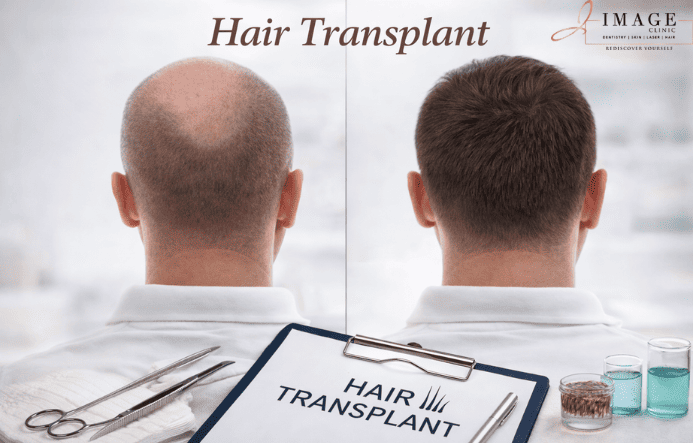
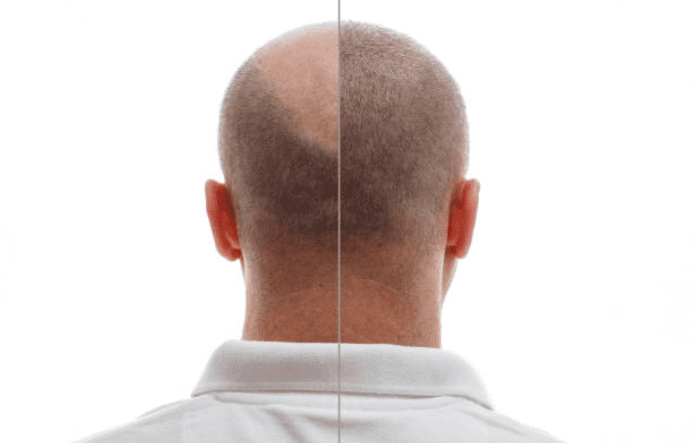
- Hair Transplant: For patients with established androgenetic alopecia where significant follicle miniaturisation and permanent follicle loss has already occurred, hair transplant — FUE or FUT depending on the clinical assessment — is the definitive restoration procedure. October is an optimal season for hair transplant planning — the cooler post-monsoon months allow comfortable healing with lower sweat and UV exposure.
- Alopecia Areata Treatment: For patients with patchy hair loss characteristic of alopecia areata — an autoimmune condition that often presents or flares post-monsoon — IMAGE Clinic’s targeted treatment protocol addresses the immune-mediated follicle attack that is driving the loss.
View documented hair restoration results at IMAGE Clinic for reference outcomes across all hair loss conditions and treatment approaches.
People Also Ask: Post-Monsoon Hair Fall in Kolkata
Why does hair fall more after the monsoon?
Short answer: Post-monsoon hair shedding in October reflects a seasonal synchronisation in the hair growth cycle — a higher proportion of follicles enter the resting (telogen) phase during peak UV months (July–August), completing their rest and shedding in October–November. This seasonal telogen effluvium is normal, temporary, and self-resolving in most people. IMAGE Clinic’s hair specialists assess whether October shedding is seasonal or reflects an underlying condition that requires treatment.
Is post-monsoon hair fall normal?
Short answer: A temporary increase in daily hair shedding in October — typically 150–200 hairs per day rather than the baseline 50–100 — is a normal seasonal pattern. It should resolve within eight to twelve weeks, with visible baby hair regrowth appearing at the hairline and parting by months two to three. Hair fall that continues beyond twelve weeks, is concentrated at the crown or temples, or involves progressively finer hair warrants an assessment at a specialist hair clinic in Kolkata.
How do I know if my hair fall is more than seasonal?
Short answer: Signs that hair fall is beyond seasonal: it continues for more than twelve weeks; thinning is concentrated at the crown and temples rather than diffuse; the shed hairs include fine, short, miniaturised hairs rather than full-length telogen hairs; no visible regrowth appears by month three; or there are associated symptoms such as irregular periods, acne, unexplained fatigue, or scalp inflammation. Any of these warrants clinical assessment at IMAGE Clinic’s hair loss programme.
How long does post-monsoon hair fall last?
Short answer: Pure seasonal telogen effluvium lasts eight to twelve weeks — peaking in weeks three to four and then progressively reducing. Baby hair regrowth at the hairline and parting is visible from weeks six to eight as the follicles return to anagen. If the shedding has not meaningfully reduced by week twelve, or if no regrowth is appearing, the fall is likely not purely seasonal and warrants a clinical hair assessment.
What is the best treatment for post-monsoon hair loss in Kolkata?
Short answer: For pure seasonal telogen effluvium: nutritional support (iron, vitamin D, zinc, protein optimisation), scalp health maintenance, and monitoring — no clinical treatment required. For underlying androgenetic alopecia revealed by seasonal shedding: PRP hair treatment is the most effective non-surgical intervention, combined with topical minoxidil. For PCOS-driven hair loss: hormonal management alongside PRP. A correct diagnosis from IMAGE Clinic’s hair specialists determines which treatment is appropriate.
| Hair Loss Treatment in Kolkata — IMAGE Clinic Accurate diagnosis first. Matched treatment. Real hair restoration. Book Your Appointment Now | Call: 09830 836 666 Or visit your nearest IMAGE Clinic — find your nearest branch here. |