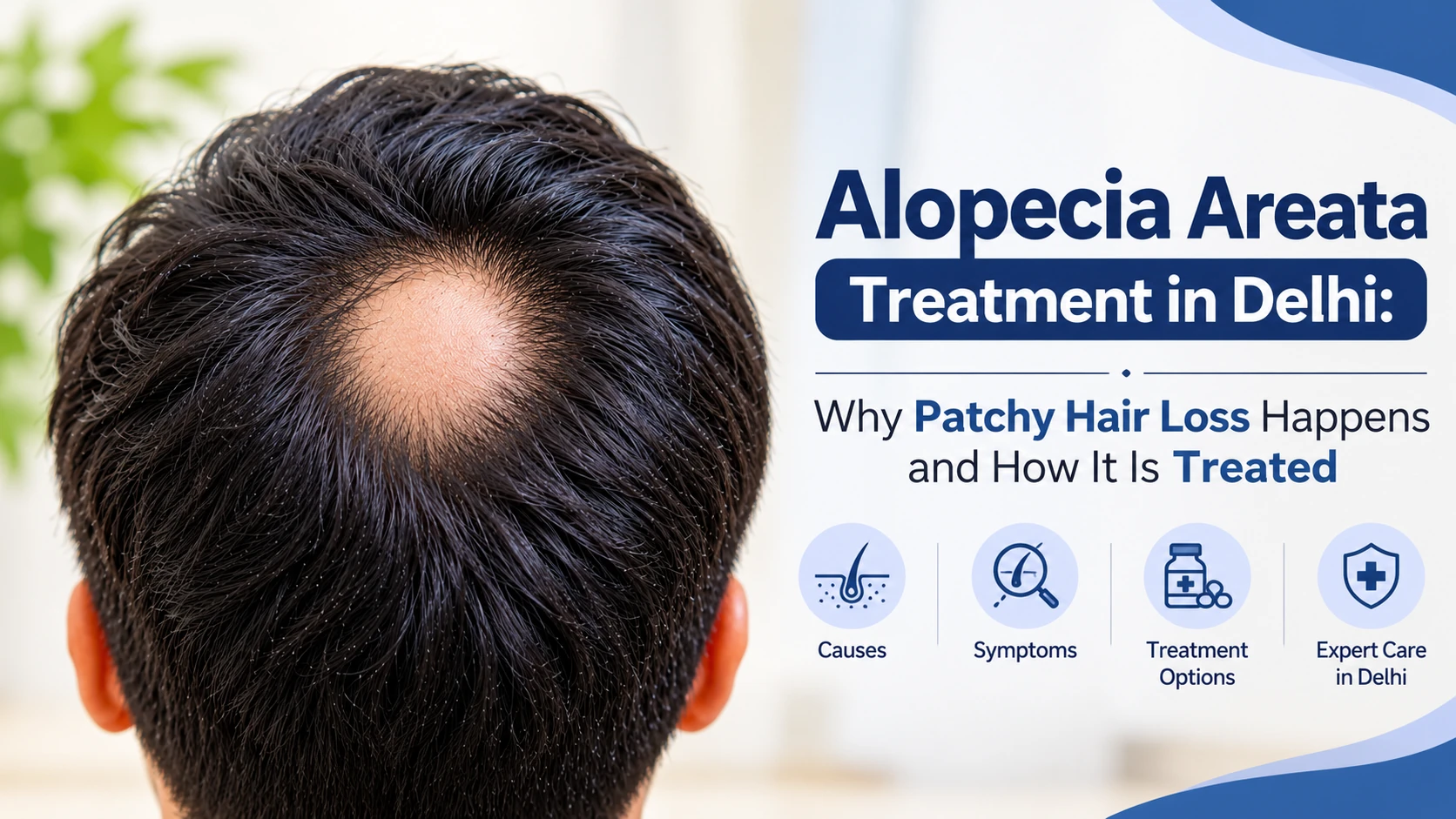
You run a comb through your hair one morning and your fingers stop on a patch of bare skin. It is smooth, round, about the size of a coin, and it was not there last week. No itching, no pain, nothing to explain it.
Thank you for reading this post, don't forget to subscribe!If that is where you are right now, the panic is understandable. Most people’s first guess is stress, or the water, or something they ate. Chances are it is alopecia areata, a condition many people deal with quietly and one that dermatologists see and treat all the time. Here is why patchy hair loss happens, what usually sets it off, and how alopecia areata treatment in Delhi generally works, so you know what to ask when you sit across from a doctor.
What Is Alopecia Areata?
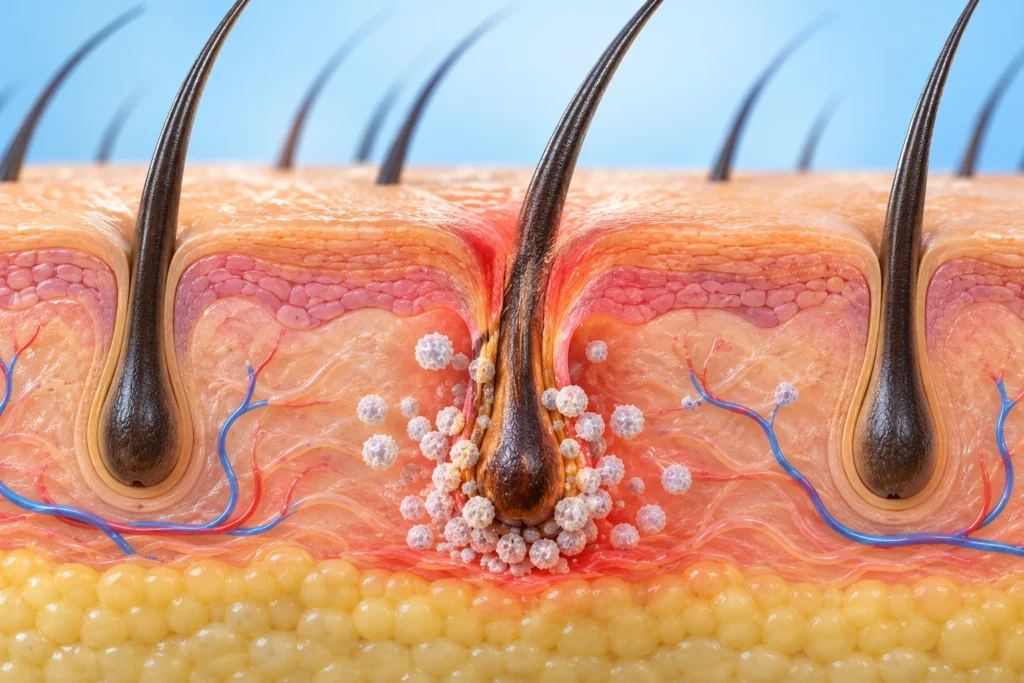
Alopecia areata is an autoimmune condition. The immune system, which normally fights infections, mistakenly goes after the hair follicles, the small roots each hair grows from. The follicles are not destroyed. They simply switch off for a while, and that is why hair can grow back.
The typical sign is a round or oval bald spot on the scalp, and sometimes there is more than one. Sometimes the beard, eyebrows or eyelashes are affected too. In rare cases it spreads across the whole scalp (alopecia totalis) or the entire body (alopecia universalis). Most people, though, only ever get a few small patches.
Anyone can get it, men or women, at any age. It is often first noticed in children and young adults, which is why many parents end up searching for patchy hair loss treatment after spotting a bald spot on their child’s head.
Why Does Patchy Hair Loss Happen? Understanding Alopecia Areata Causes
Nobody has pinned it down to a single reason so far. It seems to be a few things coming together in the same person.
The biggest factor is the immune system itself. For reasons still not fully understood, immune cells attack the follicles and interrupt the normal hair growth cycle.
Family history plays a part as well. If a close relative has alopecia areata, or an autoimmune condition like thyroid disease, vitiligo or type 1 diabetes, your own chances are a little higher.
Stress comes up in a lot of patient stories. People tell their doctor the first patch appeared around exams, a job change, a death in the family or a long illness. Stress alone does not cause alopecia areata, but in someone who is already prone to it, it can be the push that sets things off.
A bad viral fever or infection can sometimes trigger it too, again mostly in people who are already susceptible.
Doctors also check for thyroid problems, anaemia and low vitamin D. These can exist alongside alopecia areata, or make the hair loss look worse than it is.
One thing needs saying plainly: alopecia areata is not contagious, and you did not cause it. It is not your shampoo, not too little oiling, and not your diet alone.
Is It Really Alopecia Areata? Other Reasons for Bald Patches
Not every bald patch is alopecia areata. That is exactly why a proper diagnosis matters, because the right patchy hair loss treatment depends on finding the real cause.
- A fungal infection of the scalp (tinea capitis) usually brings scaling, itching or broken hairs, and it needs antifungal medicine, not immune treatment.
- Telogen effluvium thins the hair all over the scalp, often a few months after a fever, delivery, crash diet or a very stressful time.
- Pattern baldness is slow and follows a set pattern, like a receding hairline or a widening parting.
- Traction alopecia is what happens when braids, tight ponytails or buns keep tugging at the same spots for years.
In alopecia areata, the skin under the patch usually looks perfectly normal. Around the edge, a dermatologist may notice tiny broken hairs that are thin near the root and thicker at the tip, like an exclamation mark. That small detail is a classic clue.
When Should You See a Doctor?
Do not wait and watch for months. If you are considering alopecia areata treatment in Delhi, see a skin and hair specialist when:
- A bald patch appears out of nowhere, even a small one
- The bald areas are spreading, or new ones keep showing up
- Your eyebrows, lashes or beard are thinning too
- The skin on the patch is red, flaky, itchy or sore
- It is your child who has the patch
The sooner it is looked at, the better treatment tends to work. An early visit also rules out other causes, which alone takes a lot of worry off your mind.
How Alopecia Areata Is Diagnosed
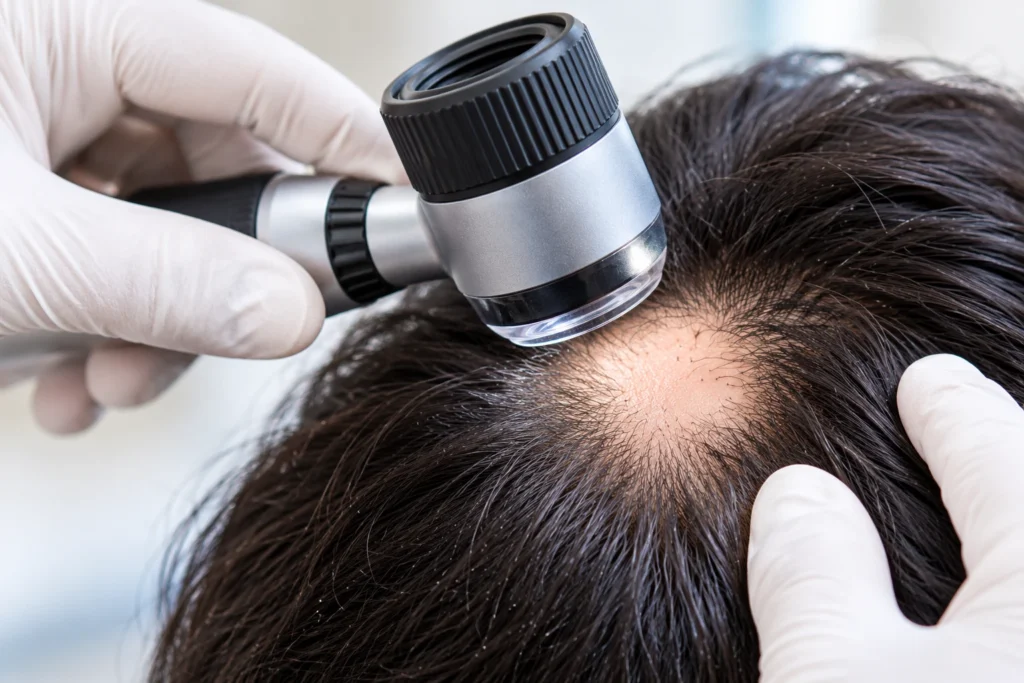
In most cases the doctor simply looks closely at your scalp and asks a few questions about your health, any recent stress and your family history. Depending on what they see, they may also use:
- Dermoscopy, a hand-held magnifier that shows the hair openings and shafts in detail
- Blood tests for thyroid, vitamin D and iron, and sometimes autoimmune markers
- A scalp scraping or a small biopsy when the picture is unclear, to rule out infection or scarring conditions
This step is quick, mostly painless, and sets the direction for your alopecia areata treatment in Delhi, since the right plan always starts with the right diagnosis.
Alopecia Areata Treatment in Delhi: What Options Are Available?
Dermatology clinics across Delhi offer several hair and scalp treatments, so if you are searching for alopecia areata treatment in Delhi, you will not be short of choices. What suits you depends on your age, how much of the scalp is involved, how long the patches have been there and your general health. No single treatment works for everyone.
1. Topical Corticosteroids
These are creams, lotions or foams you rub onto the patch to calm the immune activity right there. Doctors often start with them for mild, patchy cases, and they are commonly used in children too.
2. Intralesional Steroid Injections
For small to medium patches, the dermatologist may inject a very dilute steroid straight into the skin with a fine needle. It sounds worse than it feels, and the sting passes quickly. Some patients notice fine new hair within a few weeks, and the doctor repeats the injections at set intervals.
3. Topical Minoxidil
Minoxidil does not touch the immune problem behind alopecia areata, but it encourages hair to grow and is often used alongside other treatments.
4. Topical Immunotherapy
For stubborn or widespread cases, a special chemical is applied to the scalp to cause a mild allergic reaction, which pulls the immune cells away from the follicles. It takes patience and regular visits, but it can work when other options have not.
5. Oral Medicines and Newer Therapies
When alopecia areata is widespread or moving fast, doctors may consider tablets that calm the immune response. A newer group of drugs called JAK inhibitors has changed the outlook for severe cases in recent years. They are prescription-only and need screening and regular monitoring, so never take them without a qualified doctor guiding you.
6. Light-Based and Supportive Care
Light therapy, correcting deficiencies (iron, vitamin D or zinc, if you are actually low) and some form of stress management often get added to the plan. Some clinics also offer PRP and hair mesotherapy, but the evidence for them in alopecia areata is still limited, so ask your doctor what to realistically expect before paying for either one.
What to Expect From Hair Regrowth Treatment in Delhi
People often ask, “How soon will my hair come back?” The honest answer is that it varies, and results from alopecia areata treatment in Delhi, like anywhere else, depend on the person. Hair grows slowly, roughly a centimetre a month, so even when treatment is working, visible results usually take a few weeks to a few months.
A few things are worth knowing before you start hair regrowth treatment in Delhi:
- The first hair to appear is often fine and light in colour, and it may darken with time.
- Alopecia areata is unpredictable. Hair can grow back fully, partly, or fall out again later.
- A relapse does not mean the treatment failed.
- Sticking with one plan works better than switching remedies every few weeks.
Be wary of anyone who promises a guaranteed cure in a week. For an autoimmune condition, no honest doctor can.
Choosing the Best Dermatologist for Alopecia Areata
With so many clinics around, choosing one is not easy. When you look for the best dermatologist for alopecia areata in Delhi, these are worth checking:
- A board-certified dermatologist who regularly treats hair and scalp problems, not someone who offers it as a side service
- A doctor who examines your scalp and asks for relevant tests first, instead of handing everyone the same product
- Someone who explains what you have, what the options are and what results are realistic, in words you can follow
- No pressure to buy expensive packages or miracle products on the very first visit
- Alopecia areata treatment in Delhi means regular review visits, so pick a clinic that is easy for you to reach
- A doctor who actually listens, because hair loss is emotional and that makes the whole journey easier
Patient reviews and recommendations from family or friends can help, but remember that everyone responds to treatment differently.
Everyday Habits That Support Recovery
The medicine does most of the work, but a few everyday habits can help:
- Eat proper meals with enough protein, iron and vitamin D
- Sleep on time and keep a steady routine
- Find some way to ease stress, whether that is a walk, yoga or just talking to someone you trust
- Avoid tight hairstyles and harsh chemical treatments on the affected areas
- Cover your scalp with a cap or scarf in strong sun
- Do not pick at, scratch or pull the patches
Dealing With the Emotional Side
This part gets ignored a lot, so let me say it: losing hair in patches hurts, and it is okay to feel anxious, embarrassed or low about it. Hair is tied up with how we see ourselves, and young people and women often feel it the most. Talk to someone, whether that is family, a support group or a counsellor. If you want to cover the patches with a wig or hair fibres while you wait for regrowth, that is a perfectly fine choice.
Final Thoughts
A bald patch is scary when you first find it, but alopecia areata is manageable, and many people do see their hair return with the right guidance. The one thing I would say is do not sit on it. Get the patch checked, find out what is behind it, and ask for a patchy hair loss treatment plan that suits you.
If you have been thinking about alopecia areata treatment in Delhi, book a consultation with a good dermatologist soon and ask every question on your mind. Hair takes time to return, so be patient with the process. The follicles are still there, and with proper care there is a real chance of regrowth.
Frequently Asked Questions
Can alopecia areata be cured for good?
There is no permanent cure yet, but the condition can be controlled. Many people get their hair back, and some lose it again after a few months or years. A relapse is common enough that doctors plan for it.
Will the hair grow back without any treatment?
Sometimes it does, especially when there are only one or two small patches. But nobody can tell in advance whose hair will return on its own and whose will not, so getting it checked early is the safer route.
Can I pass it on to my children?
It does run in some families, but having it does not mean your child will get it. The risk is a bit higher than average, not a certainty.
Are treatments safe for children?
For kids, doctors usually begin with gentle options like creams or lotions. Injections and stronger medicines are kept for older children and adults, and only when the doctor feels they are needed.
Do oils, shampoos or hair supplements work?
No oil or shampoo has been shown to switch off the immune attack behind alopecia areata. Supplements help only if a blood test shows you are actually low on something. Test first, then decide.
Should I see a dermatologist or go to a hair clinic?
Start with a dermatologist, because they are medical doctors who can diagnose the cause and prescribe properly. Whichever clinic you pick, make sure the person prescribing your treatment is a qualified doctor.
How much does alopecia areata treatment in Delhi cost?
It varies a lot. A single steroid cream costs far less than months of injections or newer prescription medicines, so the bill depends on what your doctor recommends. Ask for a clear estimate at the first visit, before you begin.