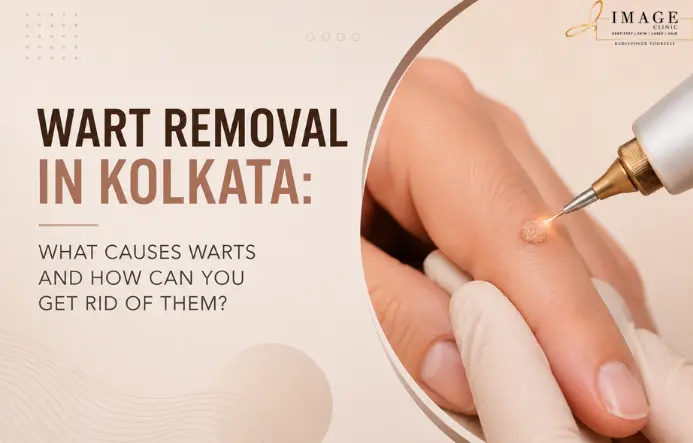
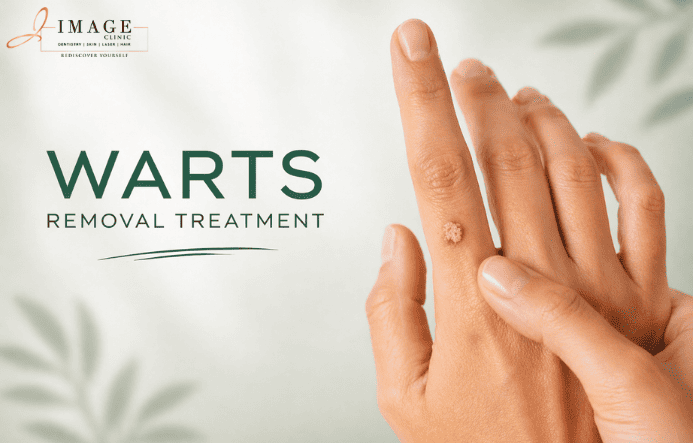
Warts are among the most common viral skin conditions — and among the most frustrating. Despite being non-cancerous, they can be painful, embarrassing, and maddeningly resistant to home remedies. If over-the-counter treatments have failed you, professional wart removal treatment in Kolkata at IMAGE Clinic offers clinically precise, evidence-based solutions tailored to the type and severity of your warts.
This guide covers what warts are, why they develop, how different types behave, and which removal methods are most effective — so you can approach your treatment with full confidence and realistic expectations.
| Struggling with persistent warts? Our dermatologists can help you achieve lasting clearance. Book Your Warts Consultation at IMAGE Clinic |
What Are Warts and What Causes Them?
Warts are benign skin growths caused by infection with the Human Papillomavirus (HPV). The virus enters the skin through microscopic cuts or abrasions, stimulating rapid, abnormal growth of keratinocytes — the cells that form the outer layer of the skin. More than 100 strains of HPV have been identified, with different strains tending to infect different body sites and producing distinct wart types.
HPV is highly contagious — it spreads through direct skin-to-skin contact, shared surfaces such as gym floors and swimming pools, and auto-inoculation, whereby the virus spreads from one body site to another through touching or scratching. Not everyone exposed to HPV develops a wart; the immune system typically clears the virus without clinical manifestation. Those with compromised immunity are more susceptible and may find warts harder to treat.
Types of Warts: Understanding Your Condition
| Wart Type | Medical Name | Common Locations | Appearance |
| Common warts | Verruca vulgaris | Hands, fingers, knees | Rough, raised, dome-shaped; black dots visible (thrombosed capillaries) |
| Plantar warts | Verruca plantaris | Soles of feet | Flat, pushed inward; painful on pressure; mosaic pattern possible |
| Flat warts | Verruca plana | Face, forehead, legs | Smooth, flat-topped, skin-coloured or slightly pink; often multiple |
| Filiform warts | Verruca filiformis | Face, eyelids, neck, lips | Long, thin thread-like projections; grow rapidly |
| Periungual warts | Verruca subungualis | Around and under nails | Cauliflower-like clusters; can affect nail growth |
Warts Removal Treatment in Kolkata: Methods Available at IMAGE Clinic
At IMAGE Clinic, wart removal treatment in Kolkata is tailored to the type, number, location, and depth of each wart, as well as the patient’s skin tone and medical history. Our dermatologists select — and where necessary combine — the most effective techniques for each individual case.
Cryotherapy (Liquid Nitrogen)
Cryotherapy is one of the most established treatments for common, plantar, and flat warts. Liquid nitrogen at approximately -196°C is applied directly to the wart, causing rapid freezing of the wart tissue. Ice crystals form within the cells, rupturing cell membranes and destroying the HPV-infected keratinocytes. The treated tissue blisters, scabs, and sloughs off over seven to fourteen days. Multiple sessions — typically three to six at two-to-four-week intervals — are usually required for complete clearance.
Radiofrequency (RF) Ablation
RF ablation delivers high-frequency electrical current directly into the wart tissue via a fine electrode, vaporising the abnormal keratinocytes without significant thermal spread to adjacent skin. This technique is particularly effective for filiform warts, periungual warts, and warts resistant to cryotherapy. Performed under local anaesthesia, most warts can be treated in a single session with minimal scarring.
Laser Treatment
For warts that have not responded to cryotherapy or RF ablation, laser treatment offers a highly targeted approach. CO2 laser precisely ablates wart tissue layer by layer, while the Nd: YAG laser targets the blood vessels feeding the wart, cutting off its supply and causing regression. Laser treatment is particularly valuable for recurrent warts, mosaic plantar warts, and periungual warts where other methods have been ineffective.
Salicylic Acid Chemical Peel Protocol
Medical-grade chemical peel treatments using high-concentration salicylic acid (25–70 per cent) are effective for common and plantar warts, particularly as part of a sequential protocol with cryotherapy or laser. Salicylic acid breaks down the keratin structure of the wart, gradually dissolving abnormal tissue over several applications. It is also used as a preparatory step before cryotherapy to reduce the bulk of thicker plantar warts and improve treatment penetration depth.
Immunotherapy for Recalcitrant Warts
For patients with multiple, widespread, or treatment-resistant warts — particularly those with underlying immune compromise — intralesional immunotherapy stimulates a local immune response that helps the body recognise and reject HPV-infected cells. Agents such as intralesional bleomycin or Candida antigen injection can achieve clearance of not only the injected wart but also distant warts through a systemic immune priming effect.
| Not sure which wart removal method is right for you? Our dermatologists will assess your case.Book Your Consultation Now |
Comparing Warts Removal Methods: A Quick Reference
| Method | Best For | Sessions Needed | Downtime | Anaesthesia |
| Cryotherapy | Common, plantar, flat warts | 3–6 sessions | 7–14 days (scabbing) | Topical (mild) |
| RF Ablation | Filiform, periungual, resistant warts | 1–3 sessions | 7–14 days | Local injection |
| CO2 / Nd:YAG Laser | Recurrent, mosaic, periungual warts | 1–3 sessions | 10–21 days | Local injection |
| Salicylic Acid Peel | Common, plantar warts (adjunct) | 4–8 sessions | Minimal | None |
| Immunotherapy | Multiple, widespread, resistant warts | 3–5 sessions | Mild swelling | Local injection |
Plantar Warts: Why They Require Special Attention
Plantar warts deserve specific discussion because they are among the most challenging warts to treat. Because they grow on the weight-bearing surface of the foot, body pressure forces them inward rather than outward — making them deeper and more resistant to superficial treatments than they appear.
- Pressure-induced pain: Unlike other warts, plantar warts can cause significant pain with every step, particularly when located over bony prominences such as the ball or heel of the foot.
- Mosaic pattern: Multiple plantar warts can coalesce into a mosaic plaque covering a wide area of the sole. These require aggressive, multi-session treatment protocols.
- Depth of infection: Plantar warts can extend several millimetres into the dermis, requiring aggressive cryotherapy with appropriate freeze-thaw cycles or RF ablation for adequate penetration.
- Recurrence risk: Even after apparent clearance, HPV may persist in surrounding skin cells, leading to recurrence. A complete treatment course with follow-up review is essential.
Our dermatologists at IMAGE Clinic are experienced in managing plantar warts with combination protocols — typically involving salicylic acid pre-treatment followed by cryotherapy, with RF ablation for resistant cases — to maximise clearance rates while minimising discomfort.
What to Expect During Your Warts Removal Treatment at IMAGE Clinic
- Consultation and Assessment: Your dermatologist will confirm the diagnosis, assess the wart type and depth, and review any previous treatments. For periungual warts, additional assessment may be required.
- Treatment Selection: Based on your wart type, location, and history, your dermatologist will recommend the most appropriate removal method — or combination of methods — and discuss the number of expected sessions and the recovery timeline.
- Pre-Treatment Preparation: Local anaesthetic — topical cream or injection — is applied. For plantar warts, pre-softening with salicylic acid in the days before treatment may be recommended to reduce wart bulk.
- The Procedure: Most wart removal procedures take 15–30 minutes. Cryotherapy sessions are particularly quick. RF ablation and laser treatments take slightly longer, depending on the number and size of warts.
- Aftercare: You will receive written aftercare instructions — typically including keeping the treated area clean and dry, applying antibiotic ointment, avoiding picking the scab, and limiting activities that stress the treated area.
- Review and Follow-Up: A review appointment is scheduled two to four weeks post-treatment to assess clearance and determine whether further sessions are needed.
Preventing Wart Recurrence: Practical Guidance
- Avoid walking barefoot in communal areas: Gym floors, swimming pool surrounds, and public showers are high-risk environments for plantar wart transmission.
- Do not touch or pick warts: Picking warts spreads the virus to adjacent skin and fingertips. Auto-inoculation is a common cause of new wart development in existing patients.
- Keep skin intact: Cuts, abrasions, and dry, cracked skin provide entry points for HPV. Regular moisturisation and prompt wound care reduce transmission risk.
- Do not share personal items: Towels, nail clippers, pumice stones, and socks should not be shared with individuals who have active warts.
- Support immune function: Adequate sleep, stress management, and balanced nutrition all reduce susceptibility to HPV infection and wart development.
Why Choose IMAGE Clinic for Warts Removal Treatment in Kolkata?
- Accurate Diagnosis First: Warts are sometimes mistaken for corns, calluses, or other skin lesions. Our specialist dermatology team conducts a thorough clinical assessment before any treatment, ensuring you are treated for the right condition with the right method.
- Multiple Treatment Modalities: IMAGE Clinic offers cryotherapy, RF ablation, CO2 and Nd: YAG laser, and chemical peel protocols — allowing us to select and combine the most effective approach for your specific warts.
- US FDA-Approved Equipment: All energy-based devices used at IMAGE Clinic carry US FDA approval, ensuring consistent safety and efficacy standards.
- Indian Skin Expertise: Fitzpatrick types III–V require careful parameter selection to avoid post-inflammatory hyperpigmentation at treatment sites. Our dermatologists are specifically trained in managing wart removal for Indian skin tones.
- Comprehensive Skin Care: In addition to wart removal, IMAGE Clinic offers a full spectrum of skin lesion treatments and laser procedures — ensuring your overall skin health is managed holistically.
- Transparent Outcomes: View our before and after gallery to see results achieved for patients across a range of skin lesion treatments at IMAGE Clinic.
Frequently Asked Questions: Warts Removal Treatment in Kolkata
1. How many sessions does wart removal treatment require?
The number of sessions depends on the wart type, size, depth, and treatment method. Cryotherapy typically requires three to six sessions at two-to-four-week intervals. RF ablation and laser treatment often achieve clearance in one to three sessions. Your dermatologist will provide a personalised estimate during your consultation.
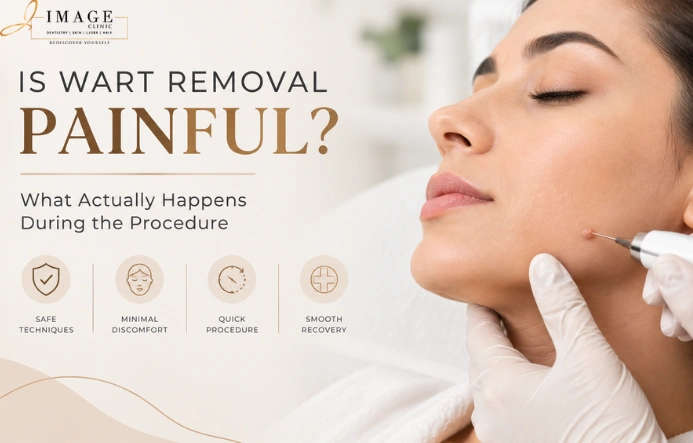
2. Is wart removal treatment painful?
Local anaesthetic is applied before all wart removal procedures at IMAGE Clinic. Most patients experience mild pressure or coldness during cryotherapy, but not significant pain. Post-treatment soreness is common, particularly for plantar warts, where normal walking resumes promptly after treatment.
3. Can warts come back after treatment?
Wart recurrence is possible because HPV can remain latent in surrounding skin cells even after visible clearance. Recurrence rates vary by wart type and immune status. A complete treatment course and appropriate aftercare minimise recurrence risk, and our dermatologists will advise on maintenance and surveillance.
4. Are warts contagious within my household?
Yes. HPV spreads through shared surfaces and direct contact. Family members should avoid sharing towels, nail tools, and footwear if one member has warts. Children are particularly susceptible and should avoid direct contact with warts on other family members.
5. Can I treat warts at home before coming to IMAGE Clinic?
Over-the-counter salicylic acid preparations can soften wart tissue and are safe for home use on common and plantar warts. However, they are often insufficient for complete clearance and should not be used on facial warts. If home treatment has not produced results within eight to twelve weeks, professional treatment is recommended.
6. Is laser wart removal suitable for children?
Cryotherapy and topical salicylic acid protocols are suitable for children. Laser treatment and RF ablation may be used in older children with appropriate anaesthesia. Our dermatologists will assess the most child-appropriate approach during the consultation.
7. What is the difference between a wart and a corn?
Corns are thickened areas of skin caused by pressure and friction — they are not caused by a virus and are not contagious. Warts, on the other hand, are viral growths with a characteristic irregular surface and thrombosed capillaries visible as black dots. Dermoscopy at IMAGE Clinic can definitely distinguish between the two.
8. Can warts spread to other parts of my body?
Yes. Touching or picking a wart and then touching other skin areas — particularly where there are small cuts or abrasions — can spread HPV through auto-inoculation. Avoiding touching warts and covering them with waterproof dressings reduces this risk.
9. How do I care for the treated area after warts removal?
Keep the area clean and dry, apply the prescribed ointment as directed, avoid picking the scab, protect from sun exposure once healed, and follow all written aftercare instructions from your dermatologist. A review appointment will be scheduled to assess healing.
10. How do I book a warts removal consultation in Kolkata?
Call IMAGE Clinic at 09830 836 666 or book online via our contact page. Visit your nearest IMAGE Clinic in Kolkata for a thorough assessment and a personalised warts removal treatment plan.
| Expert Warts Removal Treatment in Kolkata — IMAGE ClinicClinically precise. Dermatologist-led. Lasting clearance. Book Your Appointment Now | Call: 09830 836 666Or visit your nearest IMAGE Clinic — find your nearest branch here. |