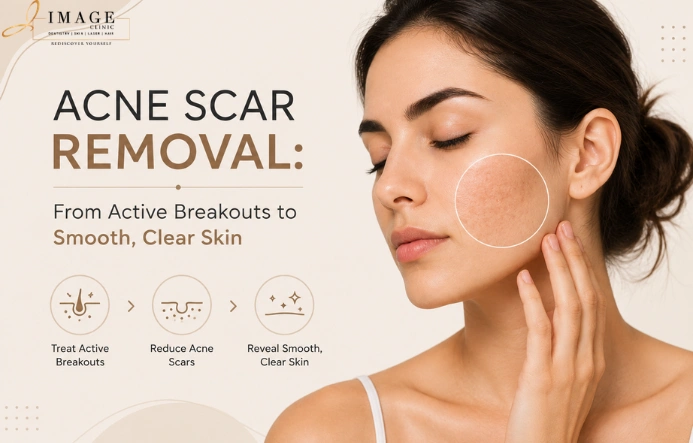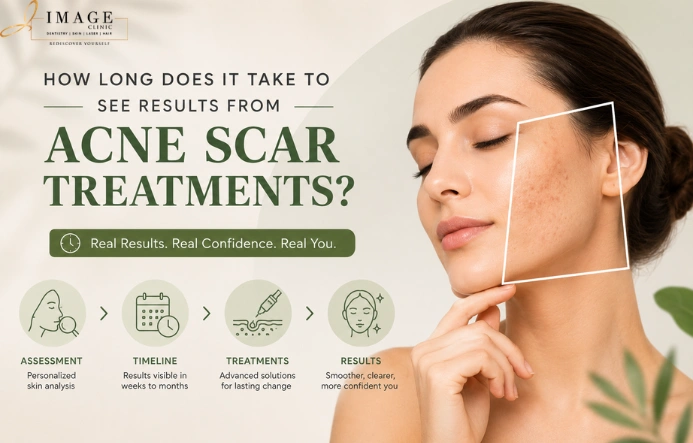
Acne scars carry a psychological weight that often outlasts the acne itself. Long after the pimples have cleared, the textural irregularities they leave behind serve as daily reminders – affecting confidence, influencing how you present yourself professionally, and sometimes even determining whether you feel comfortable in photographs.
The good news? Dermatological science has advanced dramatically. What was once considered permanent damage can now be significantly improved with the right combination of treatments. But navigating the options – from lasers to radiofrequency to surgical techniques – requires understanding what each approach does and which scar types it addresses best.
This guide breaks down everything you need to know about acne scar treatment in Kolkata, including how different scar types form, which treatments work for each, and what realistic outcomes you can expect.
| Ready to Address Your Acne Scars? Start with Expert Assessment Book Your Scar Assessment | Call: 09830 836 666 |
Why Do Some People Scar While Others Do Not?
Not everyone who has acne ends up with scars. The difference comes down to several factors that determine how your skin responds to inflammatory damage.
When acne develops, your immune system sends white blood cells to fight the infection. This inflammatory response damages the surrounding collagen. How your body repairs that damage determines whether you scar:
- Genetics: Some people produce more collagen during healing (leading to raised scars) while others produce less (creating depressions)
- Inflammation severity: Deep, cystic acne causes more tissue damage than surface-level breakouts
- Picking and squeezing: Manipulating acne lesions introduces more bacteria and extends inflammation
- Delayed treatment: The longer inflammation persists, the greater the collagen destruction
- Skin type: Darker skin tones are more prone to post-inflammatory hyperpigmentation alongside textural scarring
Understanding this process is important because it informs prevention. If you are currently experiencing active acne, getting it under control with proper pimple treatment is the first step to preventing new scars from forming.
Important Read: Acne Scars Ruining Your Confidence? Here Is How to Fix Them Permanently
The Three Main Types of Atrophic Acne Scars
Most acne scars fall into the atrophic category – meaning they create depressions in the skin due to collagen loss. Each type has distinct characteristics that determine which treatments will be most effective.
Ice Pick Scars
These are narrow (typically less than 2mm wide), deep, V-shaped depressions that extend vertically into the dermis or even subcutaneous tissue. They look like the skin has been punctured with a sharp object. Ice pick scars are notoriously difficult to treat because of their depth and narrow opening – standard resurfacing techniques cannot reach the bottom of the scar.
Best treatments: TCA CROSS (chemical reconstruction of skin scars), punch excision, punch grafting, or deep fractional lasers.
Boxcar Scars
Wider than ice pick scars (typically 1.5-4mm), boxcar scars have sharply defined vertical edges that create a box-like appearance. They can be shallow or deep. The clear demarcation between normal skin and the scar floor makes them particularly visible in certain lighting.
Best treatments: Fractional CO2 laser, MNRF (microneedling radiofrequency), subcision for deeper boxcars, or punch elevation.
Rolling Scars
These create an undulating, wave-like texture across the skin. Unlike boxcar scars, rolling scars have sloped edges and undefined boundaries. They occur when fibrous bands tether the surface skin to deeper structures, pulling it down and creating the rolling appearance.
Best treatments: Subcision (to release the fibrous bands), MNRF, fractional lasers, or dermal fillers.
Acne Scar Comparison
| Scar Type | Appearance | Depth | Best Approach |
| Ice Pick | Narrow, V-shaped | Very deep | TCA CROSS, Punch techniques |
| Boxcar | Wide, vertical edges | Shallow to deep | Fractional laser, MNRF |
| Rolling | Wave-like, sloped | Variable | Subcision, MNRF |
Most patients have a combination of scar types, which is why effective treatment often requires multiple modalities rather than a single approach.
Modern Treatment Options for Acne Scars
The landscape of acne scar treatment has transformed significantly. Where once patients had to choose between aggressive ablative lasers with weeks of downtime or ineffective creams, today’s options offer a spectrum of intensity levels and recovery periods.
MNRF (Microneedling Radiofrequency)
MNRF treatment has emerged as one of the most effective options for Indian skin. The device delivers radiofrequency energy through tiny insulated needles that penetrate the skin at precise depths. This creates controlled thermal zones that stimulate collagen remodelling without damaging the epidermis.
Why it works well for darker skin: Because the energy is delivered beneath the surface, the epidermis remains largely intact. This significantly reduces the risk of post-inflammatory hyperpigmentation – a major concern for Fitzpatrick skin types IV-VI.
Clinical studies comparing MNRF with fractional CO2 laser have shown similar efficacy (approximately 60-65% improvement) but with fewer side effects and better patient tolerance in the MNRF group. Recovery typically involves 2-3 days of redness rather than the 5-7 days common with ablative lasers.
Fractional CO2 Laser
Laser skin resurfacing with fractional CO2 remains the gold standard for treating textural irregularities. The laser creates thousands of microscopic treatment zones while leaving surrounding tissue intact, which enables faster healing than traditional ablative resurfacing.
This technology excels at treating boxcar scars, large pores, and overall skin texture. Studies show improvement rates of 30-80% depending on scar severity and number of sessions. However, the higher efficacy comes with a greater risk of pigmentation changes in darker skin and longer downtime (typically 5-7 days of significant redness and peeling).
For Indian skin, careful parameter selection is essential – lower fluence with higher density often produces better results with fewer complications than aggressive single-pass treatments.
Subcision
This surgical technique addresses the underlying cause of rolling scars – the fibrous bands that tether skin to deeper structures. Using a special needle or cannula inserted beneath the scar, the practitioner mechanically releases these bands, allowing the skin to lift.
Subcision alone can improve rolling scars by 30-50%. When combined with MNRF or fractional laser, results improve significantly. Recent studies show that MNRF with subcision achieves better outcomes than either treatment alone, with 50% of patients showing three-grade improvement on standardised scar scales.
Important Read: Achieving Flawless Skin: Effective Acne Scar Removal at Image Clinic in Kolkata
TCA CROSS (Chemical Reconstruction of Skin Scars)
For ice pick scars that are too deep for surface treatments, TCA CROSS offers a targeted solution. High-concentration trichloroacetic acid (70-100%) is precisely applied to the bottom of individual scars using a wooden applicator. This causes controlled chemical damage that stimulates collagen production from within the scar.
The technique is simple but requires expertise in application. Multiple sessions are typically needed, spaced 4-6 weeks apart. It works particularly well as a preparatory treatment before fractional laser or MNRF, essentially bringing deep scars closer to the surface where they can be more effectively resurfaced.
| Not Sure Which Treatment You Need? Get Expert Guidance Get Your Customised Treatment Plan | 09830 836 666 |
Chemical Peels
While not as powerful as lasers or MNRF, chemical peels play an important supporting role in acne scar treatment. Medium-depth peels using TCA or Jessner’s solution can improve superficial scarring and hyperpigmentation, while also enhancing the results of other treatments.
Peels are often used in a comprehensive protocol – for example, a series of glycolic acid peels to prep the skin before laser treatment, followed by maintenance peels to sustain results.
PRP and Growth Factor Therapies
PRP (platelet-rich plasma) involves extracting growth factors from your own blood and reinjecting them into scarred areas. While PRP alone shows modest results for acne scars, it shines as a combination therapy.
When applied immediately after microneedling or fractional laser, PRP enhances healing and potentially improves collagen production. Studies comparing microneedling alone versus microneedling plus PRP consistently show better outcomes in the combination group.
Dermal Fillers
For select patients with deep, tethered scars, dermal fillers can provide immediate improvement. Hyaluronic acid fillers injected beneath individual scars lift the depression to match the surrounding skin level.
The limitation is that results are temporary (6-18 months, depending on the filler). However, some biostimulatory fillers like poly-L-lactic acid may stimulate actual collagen production, providing longer-lasting improvement.
The Multi-Modal Approach: Why Combination Therapy Works Best
Single-treatment approaches rarely achieve optimal results for acne scars. The reason is simple: most patients have multiple scar types at different depths, and no single technology addresses all variations effectively.
A comprehensive treatment protocol might look like this:
- Session 1-2: Subcision to release tethered rolling scars
- Session 2-3: TCA CROSS for deep ice pick scars
- Session 3-6: MNRF or fractional CO2 for overall texture improvement
- Maintenance: Chemical peels and topical retinoids to sustain results
This layered approach addresses scars at every level – the deep structural tethering, the individual pitted scars, and the overall surface texture. Studies consistently show that combination protocols outperform single-modality treatments.
What Results Can You Realistically Expect?
Setting appropriate expectations is crucial for patient satisfaction. Despite dramatic before-and-after photos often seen online, the complete elimination of acne scars is rarely achievable. Here is what the evidence actually shows:
- Mild scarring (Grade 1-2): 70-90% improvement possible with appropriate treatment
- Moderate scarring (Grade 3): 50-70% improvement is typical
- Severe scarring (Grade 4): 30-50% improvement is more realistic
These percentages translate to meaningful real-world differences. A 50% improvement means scars that were clearly visible in normal lighting become noticeable only upon close inspection. A 70% improvement often means friends and colleagues cannot tell you ever had significant scarring.
Results develop gradually. Collagen remodelling continues for 3-6 months after treatment, meaning the skin you see at one month is not the final result. Patience and completing the full treatment protocol are essential.
Considerations for Indian Skin
Fitzpatrick skin types IV-VI (common in Indian populations) require special considerations when treating acne scars. The primary concern is post-inflammatory hyperpigmentation (PIH) – the dark marks that can develop after any treatment that causes inflammation.
Strategies to minimise PIH include:
- Pre-treatment skin preparation with tyrosinase inhibitors and sunscreen for 2-4 weeks
- Choosing treatments with lower PIH risk (MNRF is generally safer than fractional CO2)
- Using conservative parameters and building up over multiple sessions
- Strict sun avoidance and sunscreen use post-treatment
- Post-treatment depigmenting protocols, if needed
For patients prone to pigmentation, addressing any existing hyperpigmentation before scar treatment often yields better overall results.
| Have Concerns About Your Skin Type? Consult Our SpecialistsBook Your Scar Assessment | Call: 09830 836 666 |
Frequently Asked Questions About Acne Scar Treatment in Kolkata
1. How many sessions will I need for visible improvement?
Most patients require 3-6 sessions of their primary treatment (whether MNRF, fractional laser, or combination therapy) spaced 4-6 weeks apart. However, the exact number depends on scar severity, scar types present, and your individual healing response. Improvement is cumulative, with each session building on previous results.
2. Is acne scar treatment painful?
Topical numbing cream is applied before all procedures, making most treatments tolerable. MNRF is generally described as a warm, prickling sensation. A fractional CO2 laser may cause more discomfort, but it is still manageable. Subcision requires local anaesthetic injection. Most patients rate pain as 3-5 out of 10 with adequate numbing.
3. How long is the recovery after treatment?
Recovery varies by treatment type. MNRF typically involves 2-3 days of redness. Fractional CO2 laser requires 5-7 days of redness and peeling. Subcision may cause bruising lasting 7-10 days. Chemical peels range from no visible peeling (superficial peels) to 5-7 days of flaking (medium peels). Most patients return to work within 3-5 days for laser treatments, sooner for MNRF.
4. Can acne scars be completely removed?
Complete removal is rarely achievable, but significant improvement – often 50-80% – is realistic for most patients. The goal is to make scars much less noticeable rather than invisible. Deep ice pick scars are most challenging, while rolling and shallow boxcar scars typically respond better to treatment.
5. Will the results be permanent?
Collagen remodelling induced by treatment creates lasting structural improvement. However, natural ageing continues, and some patients benefit from maintenance sessions every 1-2 years. Importantly, new acne can create new scars, so controlling active breakouts remains essential.
6. Is MNRF or fractional CO2 laser better for my skin?
For Indian skin (Fitzpatrick IV-VI), MNRF often represents the better balance of efficacy and safety due to a lower risk of post-inflammatory hyperpigmentation. Fractional CO2 achieves slightly better results per session but carries a higher pigmentation risk. Your dermatologist will recommend the appropriate option based on your specific skin type, scar types, and risk tolerance.
7. Should I wait until my acne is completely clear before treating scars?
Active acne should be controlled before aggressive scar treatment. However, you do not need to be 100% acne-free. Occasional breakouts are acceptable as long as active inflammatory acne is under control. Getting proper acne treatment first prevents new scars while you treat existing ones.
8. Can I use topical products to improve acne scars?
Prescription retinoids can provide modest improvement in superficial scarring and help maintain results from professional treatments. Over-the-counter products generally cannot significantly improve atrophic scars, but may help with post-inflammatory discolouration. Sunscreen is essential to prevent scars from darkening.
9. Are at-home microneedling devices effective?
Consumer microneedling devices use shorter needles (0.25-0.5mm) that cannot reach the depth required to stimulate significant collagen remodelling. Professional treatments use needles 1.5-3.5mm, depending on the area. At-home devices may help with product absorption and mild texture improvement, but cannot treat true atrophic scarring.
10. How do I book a consultation for acne scar treatment?
You can schedule your comprehensive scar assessment by calling 09830 836 666 or booking online. During your consultation, your scar types will be identified, treatment options explained, and a personalised protocol designed for your specific needs.
Taking the First Step
Living with acne scars is not something you have to accept as permanent. Modern dermatology offers multiple effective treatments that can dramatically improve your skin texture and restore confidence.
The key is working with experienced practitioners who understand the nuances of treating acne scars on Indian skin – choosing the right combination of treatments, using appropriate parameters, and managing expectations realistically.
If acne scars have been affecting your confidence, a comprehensive assessment is the logical first step. Contact IMAGE Clinic to discuss your concerns with a specialist who can evaluate your specific scar types and recommend the most effective treatment approach for your skin.
| Your Journey to Smoother Skin Starts Here BOOK YOUR CONSULTATION NOW Call: 09830 836 666 |